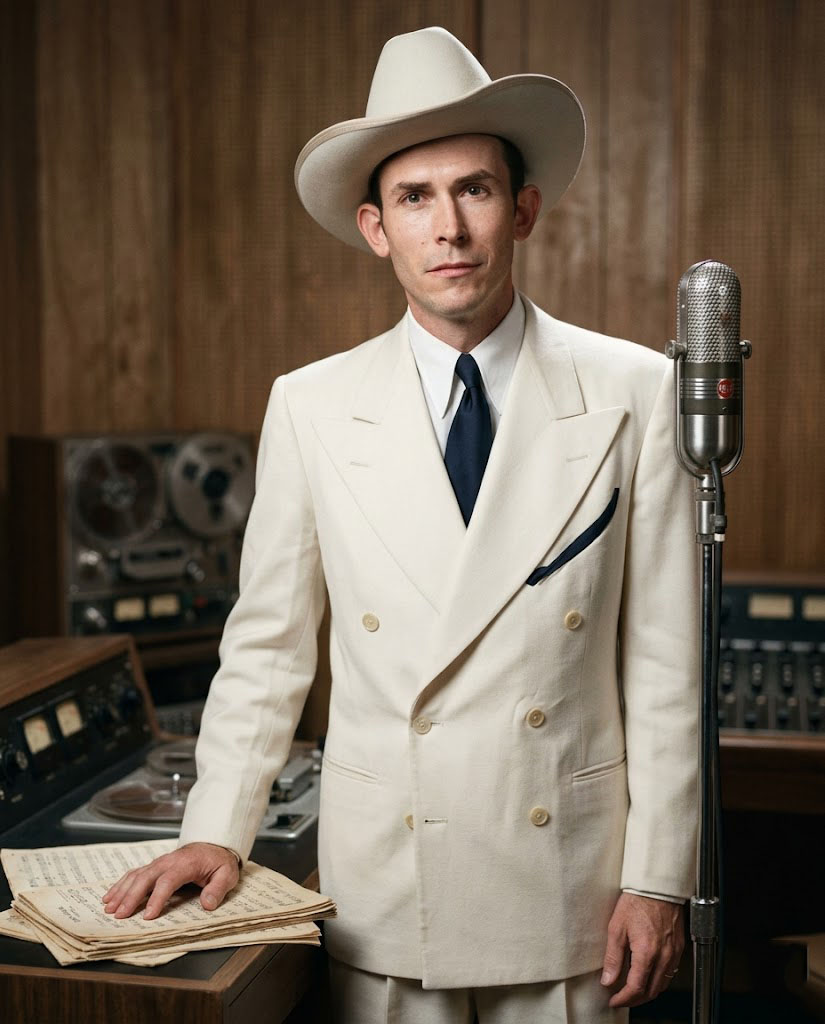
HE WROTE THE GREATEST HEARTBREAK ANTHEM IN COUNTRY HISTORY — BUT HE WOULD NEVER LIVE TO HEAR THE FINAL RECORD PLAY ON THE RADIO…
In late September of 1952, Hank Williams walked into a quiet Nashville studio to record “Your Cheatin’ Heart.” He laid down the vocal track in a single, haunting session that perfectly captured his crumbling reality. The record was meticulously pressed, finalized, and scheduled for a massive release to an eager public.
But Hank never heard that master pressing spin.
On New Year’s Day of 1953, the twenty-nine-year-old pioneer passed away in the cold backseat of a baby blue Cadillac. When the song finally hit the country airwaves just weeks later, it was no longer just a highly anticipated new single. It was a devastating, posthumous farewell.
A GIANT FALLING APART
By that tragic winter, Hank Williams was not merely a rising artist trying to find his footing. He was the undisputed architect of modern country music. He had completely reshaped the landscape of American roots storytelling.
He held a dominant string of massive Billboard hits that defined an entire generation. Timeless tracks like “Lovesick Blues” and “I’m So Lonesome I Could Cry” had already made him a towering, mythical figure. He possessed a terrifyingly rare ability to translate complex human suffering into simple, unforgettable melodies.
He did not just sing the blues. He lived inside them.
His voice became the absolute gold standard for pure, unvarnished emotional truth. But the staggering record sales and the blinding fame masked a very different reality behind closed doors. He was a man slowly disintegrating in plain sight.
THE HIGHWAY CONFESSION
His tumultuous marriage to Audrey was completely shattered beyond repair. His fragile health was rapidly fading under the heavy, unrelenting weight of exhaustion and physical pain. A suffocating, terrifying loneliness had taken permanent residence in his soul.
The inspiration for his final masterpiece did not strike in a comfortable writing room. It happened on a dark, endless stretch of highway.
Riding in the passenger seat toward a show in Louisiana, the heavy words suddenly hit him. He began dictating the raw lyrics to his new fiancée as the car sped through the night. He did not just write a clever hook for the jukebox.
He wrote a chilling, unavoidable prophecy.
He poured every single drop of betrayal, lingering bitterness, and profound heartache onto that paper. When he finally stepped up to the microphone in Nashville, the seasoned studio musicians immediately noticed a heavy shift in the room.
He sang the words with a tone so hollow, so entirely defeated, that it demanded absolute silence from everyone present. He sounded exactly like a man who knew his time on earth was rapidly expiring.
THE EMPTY THRONE
When “Your Cheatin’ Heart” was officially released, it instantly skyrocketed to number one. It dominated the charts for months and permanently cemented his status as a musical immortal. Millions of listeners bought the vinyl, finding their own private pain perfectly reflected in his final words.
Over the next seventy years, the track would be covered by hundreds of legendary artists. It became the ultimate measuring stick for true country heartbreak.
But the massive commercial triumph has always carried a heavy, lingering shadow. The man who gave the world its greatest anthem of sorrow was never there to hear the roaring applause. He never saw the final gold record hanging on the wall.
He left the most agonizing piece of his soul inside a recording booth, and then quietly slipped away into the freezing winter night.
He did not just leave behind a timeless country classic, he left behind a ghost that is still whispering in the dark…