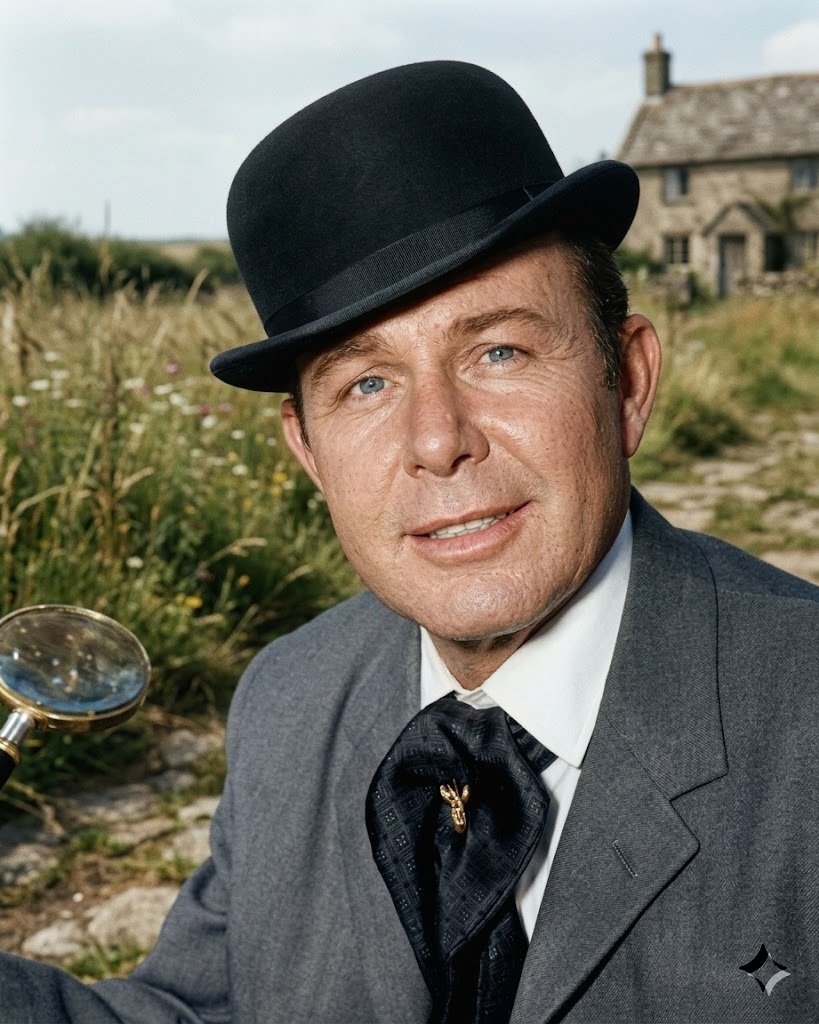
THE WORLD EXPECTED COUNTRY HEARTBREAK TO BE LOUD AND RECKLESS — BUT JIM REEVES CONQUERED THE GLOBE BY LOWERING HIS VOICE TO A WHISPER…
When Jim Reeves stepped to the microphone in 1959 to record “He’ll Have to Go,” he didn’t broadcast his pain. He delivered a masterclass in quiet devastation.
He refused to raise his voice. He took the bitter sting of a love triangle and stripped away the unnecessary melodrama. What remained was an elegant calm that altered American music forever.
THE ARCHITECT OF RESTRAINT
They called him Gentleman Jim, a title earned through absolute authenticity.
It wasn’t merely because of his tailored suits or flawless posture. It was the specific way he commanded a massive audience without ever demanding their attention.
During an era heavily defined by rugged outlaws, the charts were dominated by loud singers pouring their grief into rowdy anthems.
Reeves boldly chose an entirely different path.
He became the definitive pioneer of the sophisticated Nashville Sound. His polished records successfully bridged the wide gap between traditional country and mainstream pop.
From the busy cities of Europe to the remote corners of South Africa, his velvet baritone spun endlessly on late-night radios. He sold millions of albums globally and secured a permanent place in the Hall of Fame.
Yet, his true historical weight was never found in bronze plaques. It lived squarely inside his extraordinary restraint.
A PRIVATE CONVERSATION
To truly understand his enduring legacy, you only need to listen closely to “He’ll Have to Go.”
The recording is a breathtaking masterpiece of emotional control. There is absolutely no pleading within the lyrics.
You will not find loud accusations, bitter outbursts, or desperate grabs for unearned sympathy. He doesn’t beg the woman on the phone to stay.
He simply approaches the difficult truth like a fully grown man.
He sets the heavy emotion down carefully. His baritone moves slow and steady, carrying the massive weight of a broken heart without sounding heavy itself.
He speaks softly, almost privately. The listener is forced to physically lean closer just to catch every single word.
And that was the entire artistic point. The song doesn’t come rushing to you. You have to willingly go to it.
NO NEED FOR NOISE
That is exactly where his true nobility lives.
It wasn’t just politeness. It was supreme, quiet confidence. He felt no need to win the moment or prove his masculinity through unnecessary volume.
In his capable hands, country music stepped off the dusty, chaotic backroads. It walked into a dimly lit living room and sat down with undeniable grace.
It speaks the way adults talk when they already know how the tragic story ends.
Reeves never sounded like a man afraid of being forgotten. He sounded like a man perfectly comfortable being understood later.
He didn’t chase fleeting musical trends. He didn’t rush toward modern relevance.
He simply trusted time to do its job.
That is why his music never feels dated, but rather permanently settled.
More than half a century has passed, yet that quiet voice still finds its way into the room.
It still lowers itself to your level. It still waits patiently in the dark until you are ready to listen.
His sound doesn’t chase the relentless march of the years.
It simply stands perfectly still, and lets time move around it…