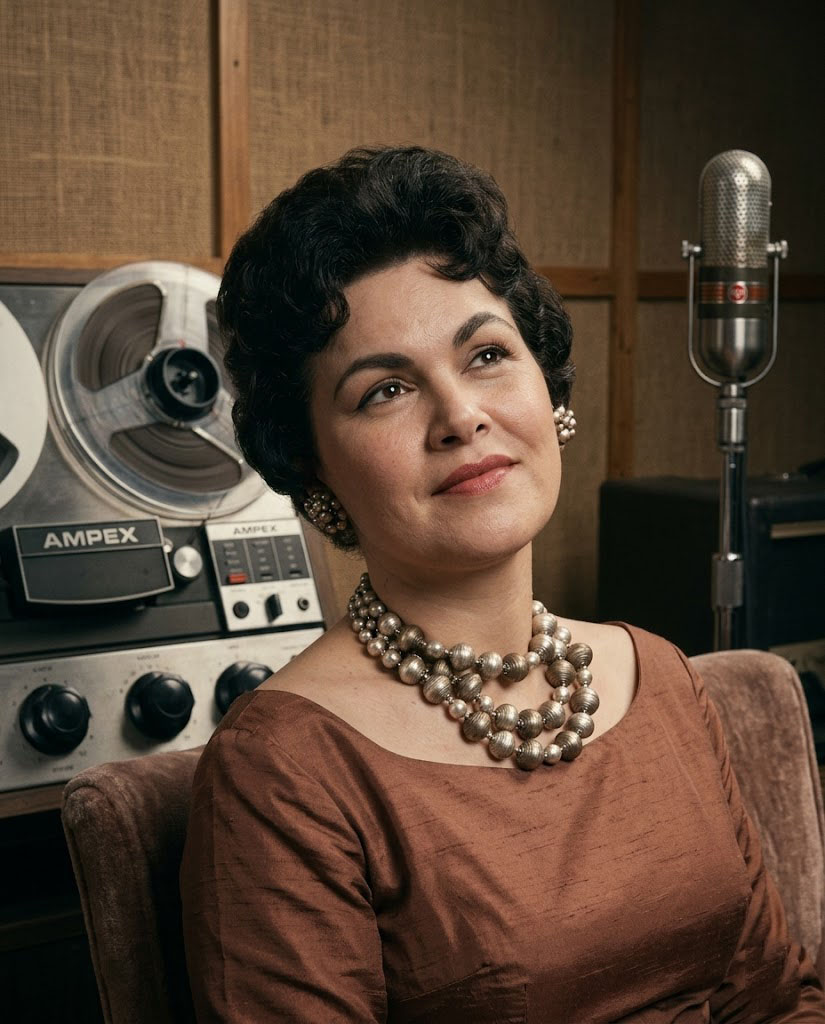
PATSY CLINE THOUGHT “I FALL TO PIECES” WOULD DESTROY EVERYTHING SHE STOOD FOR — BUT THE SONG SHE FOUGHT AGAINST ENDED UP CHANGING COUNTRY MUSIC FOREVER…
In 1960, Patsy Cline walked into a Nashville studio expecting to record another traditional country heartbreak song.
Instead, she heard something that frightened her.
The fiddles were softer.
The steel guitar sat farther back.
Strings drifted through the speakers with a polished elegance that sounded almost too smooth for country music.
And behind it all came soft backing vocals that felt closer to pop than honky-tonk.
Patsy hated it immediately.
At the time, country music still carried rough edges proudly. Patsy herself embodied that world — emotionally direct, strong-willed, unmistakably country. She had built her reputation singing with grit and emotional force, not polished sophistication.
But producer Owen Bradley believed country music was changing. He was helping shape what would later become known as the “Nashville Sound,” blending traditional country emotion with smoother arrangements designed to reach wider audiences.
Patsy feared he was sanding away her identity in the process.
And she fought him over it.
Hard.
The song itself already carried bad luck attached to it. “I Fall to Pieces,” written by songwriters Hank Cochran and Harlan Howard, had reportedly been rejected by multiple artists before finally landing with Patsy. Even then, she initially saw it as just another sad country ballad — not some revolutionary crossover experiment.
But Owen Bradley heard something bigger hidden inside it.
Patsy only heard danger.
She worried longtime country fans would accuse her of abandoning her roots. The sophisticated arrangement felt foreign to her instincts. Too refined. Too careful. She reportedly believed the record might damage her credibility permanently among traditional audiences.
That tension filled the recording session itself.
And perhaps that is part of why the performance feels so emotionally alive even now.
Because beneath the elegance, you can still hear Patsy resisting slightly — not technically, but emotionally. Her voice never becomes overly polished or detached. Instead, she sings with aching vulnerability, as though the heartbreak itself is fighting to break through the smoothness surrounding it.
That contrast became the magic.
“I Fall to Pieces” opens almost gently, but then Patsy’s voice arrives carrying genuine devastation underneath the restraint. Every line sounds wounded yet dignified. Controlled, but barely. She does not collapse emotionally inside the song.
She survives it.
That mattered.
Because country audiences recognized authenticity immediately, even inside the newer production style. Patsy’s voice grounded the song emotionally so deeply that listeners stopped worrying whether it sounded too polished. They simply believed her.
And suddenly, the thing she feared most became the very thing that elevated her into legend.
“I Fall to Pieces” became Patsy Cline’s first number-one country hit and crossed into the pop charts as well, introducing millions of listeners to a new kind of country music — one capable of sounding sophisticated without losing emotional truth.
The record helped define the Nashville Sound for an entire generation.
And Patsy stood directly at the center of it.
There is something almost heartbreaking about that now: the idea that one of country music’s most timeless voices nearly rejected the sound that would ultimately make her immortal.
But artists often fear transformation while they are standing inside it. Especially when change feels like betrayal before it reveals itself as evolution.
Patsy only knew she was protecting the music she loved.
She could not yet see that her voice was strong enough to carry country music somewhere new without losing its soul along the way.
Less than three years later, she would be gone in a plane crash at just thirty years old.
But “I Fall to Pieces” remained behind — elegant, wounded, timeless.
A song born from conflict.
A performance shaped by resistance.
And proof that sometimes the future arrives sounding exactly like the thing we are most afraid to become.
The world remembers “I Fall to Pieces” as effortless heartbreak. But hidden inside every note is the sound of Patsy Cline fighting the very future that would turn her into a legend…