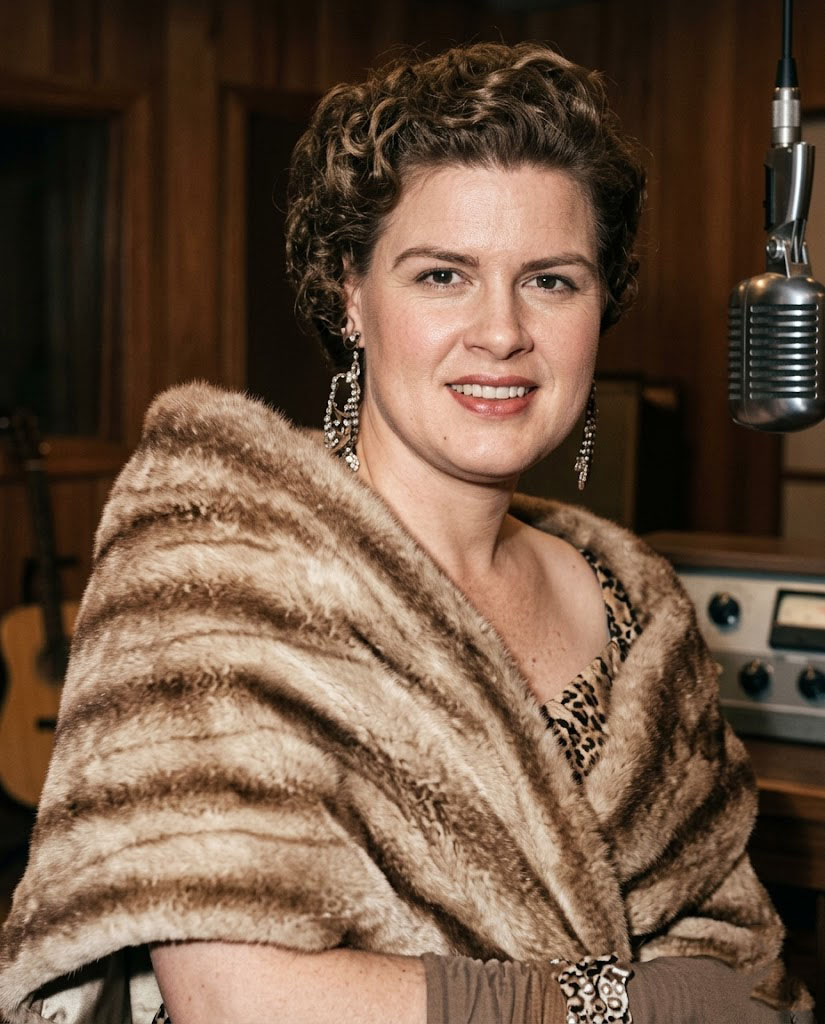
EVERYONE HEARS “CRAZY” AS A PERFECT LOVE SONG — BUT WHEN PATSY CLINE RECORDED IT, EVERY BREATH FELT LIKE BROKEN GLASS INSIDE HER CHEST…
In the summer of 1961, Patsy Cline was still recovering from a devastating car accident that nearly killed her.
The crash had thrown her through a windshield.
Her face needed stitches.
Her wrist was injured.
Several ribs were cracked badly enough that even breathing became painful.
Friends later described her recovery as brutal. She struggled simply to sit comfortably. Laughing hurt. Coughing hurt. And singing — the thing that made her who she was — suddenly demanded more from her body than it could easily give.
That was when a song arrived from a struggling young songwriter named Willie Nelson.
It was called “Crazy.”
At first, Patsy did not even like it.
The melody moved differently than most country songs of the time, drifting with unusual phrasing and almost jazz-like timing. It felt complicated. Unsteady. Hard to control. And for a singer recovering from shattered ribs, the song demanded exactly the kind of sustained vocal precision her body could barely manage.
The first recording session went badly.
Patsy tried to sing it, but the pain became overwhelming. Holding certain notes required deeper breaths than her injuries would allow. Midway through the session, she had to stop.
Not because she lacked talent.
Because her body physically could not endure it.
For many singers, that would have been the end of the story. Delay the recording. Abandon the track. Move on to something easier.
But Patsy Cline carried a stubbornness almost as famous as her voice.
A few weeks later, she returned to the studio.
Still injured.
Still hurting.
Only this time, something had changed.
Perhaps she had lived with the song long enough to understand its loneliness. Or perhaps the accident itself had stripped away every unnecessary layer until all that remained was raw feeling. Either way, when Patsy stepped back to the microphone, “Crazy” no longer sounded like a difficult composition.
It sounded personal.
Producer Owen Bradley later remembered the atmosphere in the room turning intensely focused. Patsy closed her eyes, steadied herself carefully, and began singing through pain most listeners would never detect.
That is the remarkable part.
Nothing in the final recording sounds strained. The performance feels effortless — soft, elegant, emotionally precise. Her voice floats through the melody with heartbreaking control, as though sorrow itself has become smooth enough to touch.
But underneath that calm was physical agony.
Every long phrase demanded breath her ribs resisted giving. Every sustained note required her body to push through sharp pain she could not escape. Yet somehow, instead of weakening the performance, the suffering deepened it.
You can hear it in the restraint.
Patsy never oversings “Crazy.” She lets vulnerability remain exposed inside the spaces between words. The sadness does not arrive dramatically. It lingers quietly, like someone trying to remain composed while their heart slowly breaks in private.
And astonishingly, the master take happened in one complete performance.
One take.
The version the world still hears today.
Less than two years later, Patsy Cline died in a plane crash at just thirty years old, leaving behind one of the most influential voices country music would ever know. But “Crazy” remained frozen in time — not merely as a hit record, but as proof of something deeper.
That beauty and pain often arrive holding hands.
Willie Nelson wrote an extraordinary song. Patsy Cline transformed it into something eternal because she sang it from a place no technique alone could ever reach. The physical hurt, the emotional exhaustion, the survival instinct still lingering after the accident — all of it settled invisibly into the recording.
And perhaps that is why the song still feels alive decades later.
Not polished.
Not perfect.
Human.
Sometimes the performances that sound the smoothest are the ones held together by a person quietly enduring more pain than the audience could ever imagine…