Please scroll down for the music video. It is at the end of the article! 👇👇

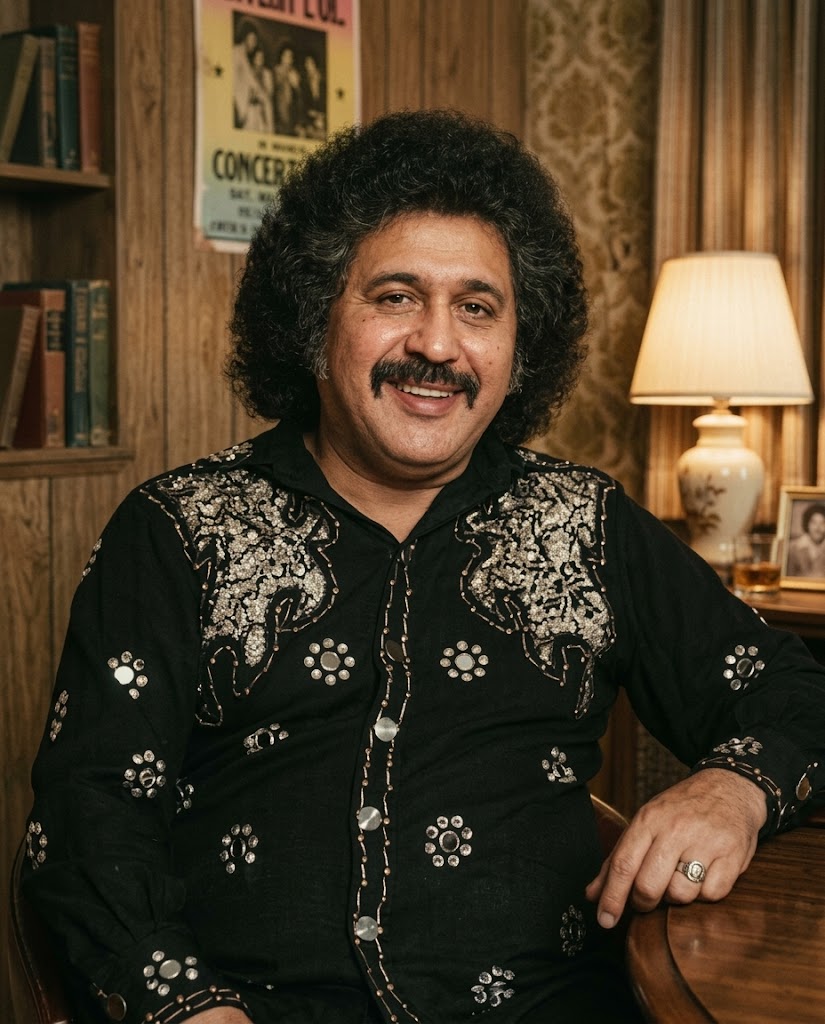
AMERICA HEARD A FLAWLESS COUNTRY HIT — BUT THE MAN SINGING IT HAD JUST SURVIVED THREE GRUELING YEARS IN LOUISIANA’S MOST NOTORIOUS PRISON.

In the spring of 1975, a gentle ballad called “Before the Next Teardrop Falls” slowly climbed its way to the absolute top of the US Country charts.

It was smooth. It was heartbroken. It sounded like standard Nashville gold.

But the man standing behind the microphone didn’t belong to the polished Nashville establishment.

He was a survivor named Baldemar Garza Huerta.

His road to that recording studio wasn’t paved with industry connections or overnight luck.

It was scarred by crushing poverty in South Texas, a stint in the Marines, and a devastating fall that almost erased his name from music history completely.

For a minor marijuana charge, he was sentenced to nearly three brutal years locked inside the walls of Louisiana’s unforgiving Angola prison.

Angola was not a place that bred gentle love songs. It was a place designed to break the human spirit.

When he finally walked out of those heavy iron gates as a free man, the music industry didn’t welcome him back with open arms.

He washed cars in the hot sun just to afford his next meal.

He spent his nights playing his guitar in rough, smoke-filled Texas dive bars, singing over the clinking of beer bottles for whoever would listen.

He was entirely convinced that his big dream had already died inside that prison cell.

When a producer later approached him to record “Before the Next Teardrop Falls,” he actually hesitated. He thought it was just another track, another fleeting moment that wouldn’t lead anywhere.

But then he stepped up to the studio microphone.

He closed his eyes, and he didn’t just sing the lyrics. He bled them.

Halfway through the track, he made a choice that changed the landscape of American country music forever.

He shifted from the English lyrics into a deeply emotional, soul-baring Spanish verse.

That unmistakable quiver in his voice wasn’t a studio trick. It wasn’t a technique taught by a vocal coach.

It was the raw, unedited sound of a man who knew exactly what a wasted day, an empty night, and a broken promise truly felt like.

With that one performance, Baldemar Garza Huerta—now known to the world as Freddy Fender—didn’t just get his life back.

He brought his Mexican-American roots to the very top of the country charts, blending two languages and uniting a deeply divided nation through the universal language of heartache.

Today, Freddy Fender is no longer with us. The stage lights have dimmed, and many of the dive bars he once played are long gone.

But if you turn on a radio late at night, that fragile, quivering voice is still right there.

It remains as a testament to the quiet resilience of the human heart.

He left us with a beautiful, undeniable truth.

Sometimes, a completely broken road is the only way to find the exact song that will heal millions.

Related Post

ON THIS DAY IN 1966, DOLLY PARTON MARRIED CARL THOMAS DEAN IN RINGGOLD, GEORGIA. NO PRESS, NO CROWDS — JUST A GIRL WHO WAS ABOUT TO CONQUER THE WORLD, QUIETLY MARRYING THE BOY FROM THE LAUNDROMAT. We know her as the ultimate global icon. The rhinestones. The towering hair. The voice that wrote “Jolene” and “I Will Always Love You.” For nearly six decades, Dolly Parton has belonged to the world. But behind the blinding lights of superstardom lies a completely different reality. It started on her very first day in Nashville in 1964. She was just a girl with a cardboard suitcase, washing her clothes at the Wishy-Washy Laundromat. A tall, quiet man drove by in a white Chevy pickup. He hollered at her to get out of the sun so she wouldn’t burn her fair skin. Two years later, they drove down to a small church in Ringgold, Georgia. There were no paparazzi. No massive guest list. Just Dolly, Carl, her mother, and the preacher. In a music industry famous for breaking hearts and tearing families apart, their survival is nothing short of a miracle. Carl never wanted the spotlight. And Dolly never made him stand in it. She would go out, wear the sequins, sing for millions, and build an empire. But when the curtain fell, she took off the wig and went home to the only man who loved her before she was anybody. She gave the public her voice, her brilliant mind, and her endless generosity. But she kept her heart fiercely protected behind closed doors. Today, she is still shining, still standing, and still reminding us of something profoundly beautiful. Sometimes, the most breathtaking thing about a superstar isn’t the monumental fame they build. It’s the quiet, unshakable love they manage to keep entirely for themselves.

IN 1963, HE WAS TURNED AWAY FROM A NASHVILLE STUDIO SIMPLY BECAUSE OF HIS SKIN COLOR — BUT A STRANGER’S HANDSHAKE THAT DAY SPARKED A SILENT 50-YEAR RITUAL. Long before he became the first Black superstar in country music, Charley Pride was just a young man chasing an impossible dream. Nashville in 1963 was a town of heavily guarded doors. When a studio refused to even let him audition because of his race, a crushed and humiliated Charley walked toward the exit, feeling completely invisible. Suddenly, an older janitor stopped him. The stranger reached out his hand and said, “Son, somebody’s gotta be first.” That single act of kindness saved a legend’s spirit. Charley would go on to shatter every barrier in the industry, selling over 70 million records and giving the world immortal hits like “Kiss an Angel Good Mornin'” and “Is Anybody Goin’ to San Antone.” He reached the pinnacle of his career, eventually winning the CMA Entertainer of the Year. But he never let the blinding lights make him forget the dark days. For the next fifty years, just minutes before stepping onstage, Charley kept a quiet, unexplainable ritual. He would walk down the line of his crew—stopping at every single guitarist, soundman, and young roadie. He shook every hand, looked them dead in the eye, and whispered, “Glad you’re here.” Inside his jacket pocket, he always carried a worn, folded piece of paper. It held a short list of people who gave him a chance when the rest of the world refused. And at the very bottom of that faded list, read in absolute silence before every single show, was one line: The janitor in Nashville. Charley Pride passed away in 2020, but his legacy is so much more than his golden baritone. He survived an industry that tried to keep him out, and spent half a century making sure no one who stood in his shadow ever felt unseen.

1976 COUNTRY MUSIC WAS BECOMING LOUDER AND FASTER. BUT WHEN A TALL, BROAD-SHOULDERED MAN WALKED ONSTAGE AND BARELY WHISPERED, THE WHOLE WORLD LEANED IN TO LISTEN. In the mid-70s, the music industry was obsessed with the next big thrill. Songs were supposed to shout. Stars were supposed to sparkle. Then came Don Williams. When he released his album Expressions, there was no dramatic rollout. No grand marketing strategy. Some radio executives admitted they didn’t even know what to do with it. There were no flashy hooks. No desperate pleas for attention. But then, “Till the Rivers All Run Dry” started to move. It didn’t explode onto the charts. It simply climbed—slow, steady, and entirely unbothered by the competition around it. When the song finally reached No. 1, Don didn’t throw a massive party or take a victory lap. He just showed up to the next empty stage, carrying his guitar the exact same way. He was a towering, broad-shouldered man who looked like he could command a room with sheer physical force. Instead, he closed his eyes and let the silence do half the work. DJs began to notice something incredibly rare. When Don’s songs came on the radio, people weren’t turning the volume up to sing along. They were turning it down. They were leaning closer to their speakers, as if his low, steady baritone was a secret meant only for them. That was the year a quiet nickname was born backstage, passed from musician to musician, completely untouched by PR machines: The Gentle Giant. Don Williams is no longer with us, but his legacy left behind a truth that Nashville often forgets. You don’t have to compete with the noise to leave a mark. Sometimes, the most powerful thing a man can do is trust the stillness, and wait for the world to quiet down.