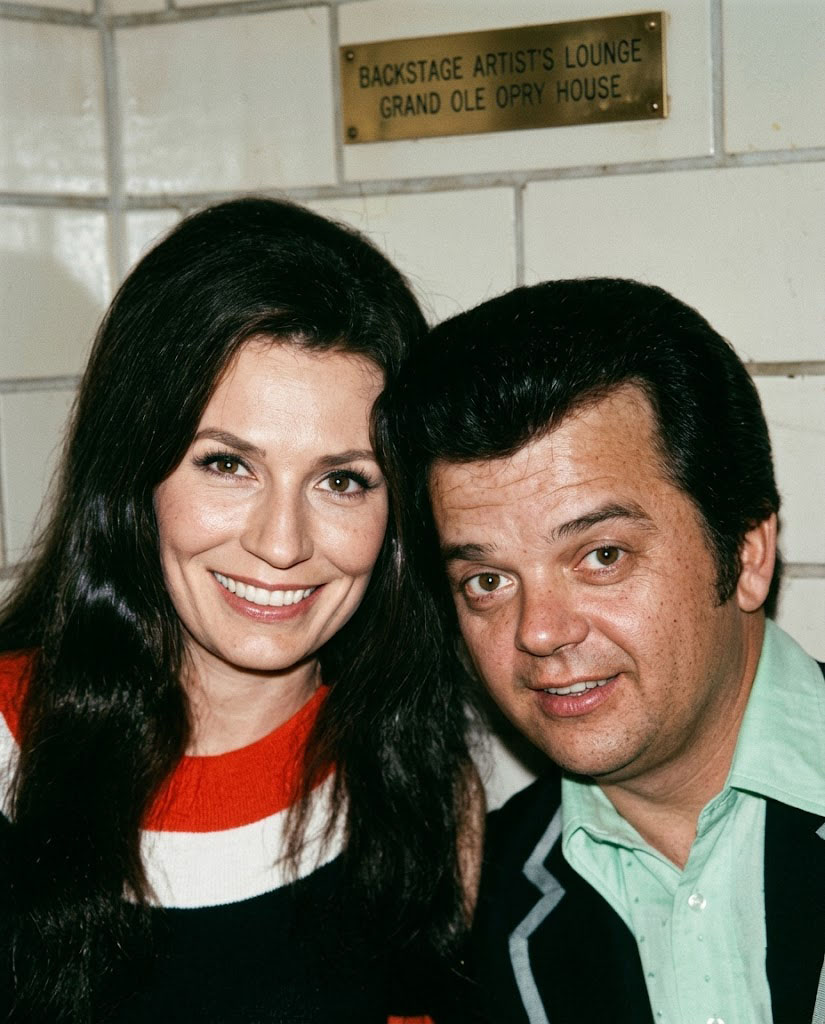
HE STOOD IN FRONT OF THOUSANDS OF PEOPLE NIGHT AFTER NIGHT — AND STILL BELIEVED THE SONGS SHOULD DO ALL THE TALKING…
Most stars are terrified of silence.
They fill every empty second with stories, jokes, applause lines, anything to keep the crowd moving. Country music especially loved personalities larger than life. The audience expected warmth, laughter, and little conversations between songs.
Conway Twitty gave them almost none of it.
When the lights came up, he would walk quietly to center stage with his guitar already hanging against his chest. No dramatic entrance. No shouting over the roar of the audience.
Then he would simply begin.
“Hello Darlin’.”
And suddenly the whole room belonged to him.
For the next hour or more, Conway moved from hit to hit with almost unsettling calm. “Linda on My Mind.” “Tight Fittin’ Jeans.” “You’ve Never Been This Far Before.” One after another, like chapters from lives the audience already knew by heart.
But between the songs?
Nothing.
No stories from the road.
No crowd work.
No long speeches thanking the audience.
Sometimes not even a single sentence.
If announcements needed to be made, someone else handled them. Conway stood quietly beside the microphone waiting for the next song to begin.
At first, some people found it strange.
How could one of the biggest stars in country music history refuse to “work the room”?
But slowly, audiences realized something important:
The silence was part of the show.
Because Conway Twitty understood something many performers never do. The more he talked, the less space the songs had to breathe.
And Conway’s songs needed space.
They carried heartbreak too intimate for jokes afterward.
Desire too vulnerable for flashy interruptions.
Loneliness too honest to be followed by applause-chasing chatter.
When he sang, people leaned forward instinctively, almost like they were being told secrets instead of hearing a concert. Women sat frozen through entire verses. Men who barely spoke during ordinary life stared silently toward the stage with their arms crossed tightly against their chest.
Nobody wanted the spell broken.
Comedian Jerry Clower understood this better than almost anyone. He famously called Conway “The High Priest of Country Music.”
Not because Conway acted larger than life.
Because his concerts felt almost spiritual.
The crowd would erupt after each song, but the moment the applause faded, a strange stillness settled over the room again. Thousands of people sitting together in near silence, waiting for the next line to arrive.
It did not feel like entertainment anymore.
It felt like confession.
Conway never performed as though he was trying to dominate an audience. He performed like a man quietly opening doors listeners were afraid to open themselves.
And maybe that restraint made the emotions hit even harder.
There was no distraction.
No performance between performances.
Just the songs standing there completely exposed.
Eventually, interviewers began asking the obvious question.
Why didn’t he talk more on stage?
Why not joke around with the crowd like everyone else?
Why not explain the songs?
Conway answered with a sentence so simple it almost sounded dismissive.
“I do talk. My communication is through my music.”
That was it.
No deeper explanation.
No theatrical philosophy.
Just the truth as he saw it.
And honestly, what else needed to be said?
“Hello Darlin’” already told people how loneliness sounded.
“Tight Fittin’ Jeans” already captured nervous desire better than ordinary conversation ever could.
“Linda on My Mind” already carried the guilt, temptation, and ache most people spend their whole lives trying unsuccessfully to explain.
Conway believed talking around those songs would only weaken them.
So he trusted the music instead.
That trust became his signature.
While other stars built careers through personality, Conway built intimacy through restraint. Fans did not leave his concerts remembering funny stories or charming stage banter.
They remembered the feeling.
The quiet.
The strange sense that one man standing nearly motionless beneath a spotlight somehow understood every complicated thing they had never quite learned how to say themselves.
And decades later, that silence still lingers around his music.
Not as emptiness.
As respect.
Because Conway Twitty knew the strongest emotions rarely arrive screaming.
Sometimes they arrive softly… standing perfectly still between two songs while an entire room holds its breath waiting for the next truth to begin…