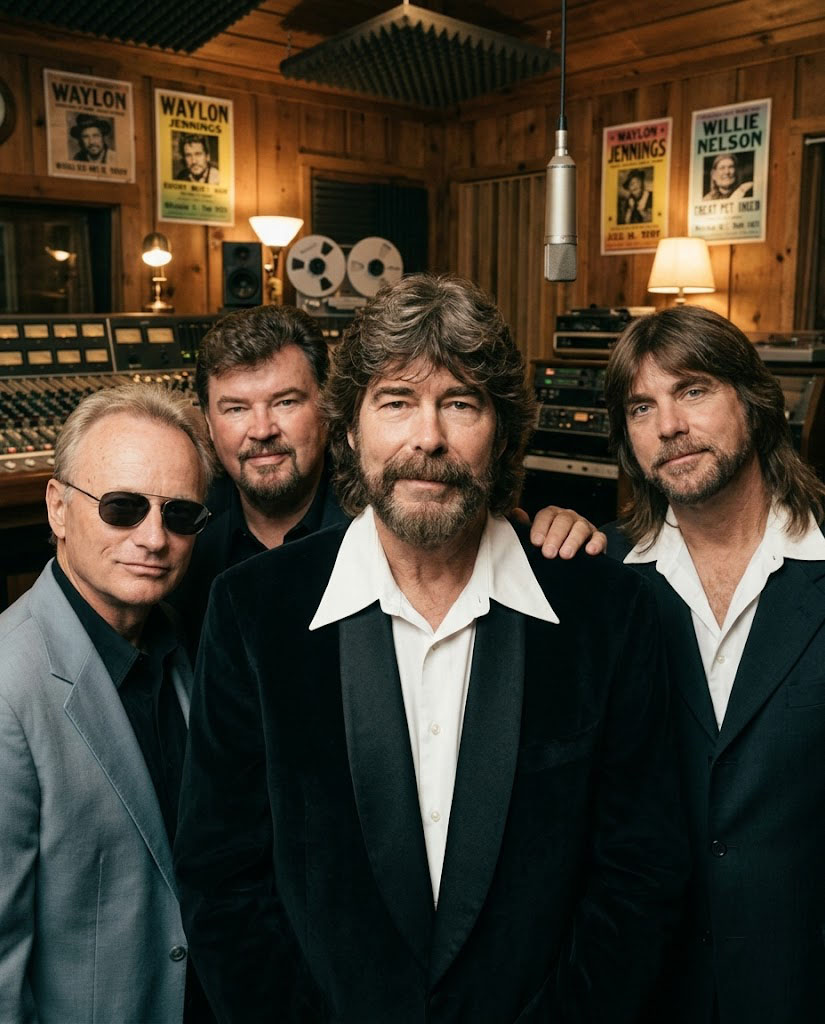
NASHVILLE SAID COUNTRY MUSIC DIDN’T HAVE ROOM FOR BANDS — SO THREE COUSINS FROM ALABAMA PLAYED UNTIL THEIR HANDS BLED AND FORCED THE ENTIRE INDUSTRY TO CHANGE…
Before the sold-out arenas, before the platinum records, before the 41 No. 1 hits, Alabama was just three cousins from Lookout Mountain trying to keep a dream alive long enough for somebody to notice it.
Randy Owen.
Teddy Gentry.
Jeff Cook.
No famous family connections.
No polished industry machine waiting behind them.
Just harmonies shaped in church pews, cotton fields, and long Southern nights where music felt less like entertainment and more like survival.
They grew up poor enough to understand work early. The kind of work that leaves dirt under your fingernails and exhaustion in your bones before sunset. Music became the thing that softened life around the edges.
And they were good.
Really good.
But Nashville did not know what to do with them.
Country music in the 1970s still revolved around solo stars. The genre loved lone storytellers standing beneath spotlights carrying heartbreak by themselves. Bands belonged to rock music, executives said. Country audiences supposedly did not want electric energy, group harmonies, or drummers pounding behind singers.
Alabama heard all of it.
Then ignored it.
Instead of waiting for approval, they drove to Myrtle Beach and became the house band at a smoky honky-tonk called The Bowery. It was not glamorous. The crowds were rough sometimes. Money was inconsistent. For seven straight years, they played six nights a week mostly for tips.
Night after night.
Year after year.
The stage became their education.
“We’d play ’til we got blisters,” Teddy Gentry later remembered. “Then we’d play ’til the blisters popped.”
That line explains almost everything about Alabama’s rise.
Because they were not built inside polished rehearsal rooms or expensive Nashville offices. They were built through repetition, exhaustion, and stubborn refusal to quit even when success looked impossible.
At The Bowery, they learned how to hold a crowd’s attention without gimmicks. How to turn strangers into believers. How to blend Southern rock energy with country storytelling in a way that felt natural instead of manufactured.
And slowly, audiences began paying attention.
Eventually Nashville did too.
But even then, the industry tried shaping them into something safer.
When Alabama finally received serious attention from RCA Records, executives reportedly suggested they hide drummer Mark Herndon from the stage because country acts were not supposed to look like rock bands. Drummers belonged in the background if they belonged there at all.
Alabama refused.
That mattered more than people realized at the time.
Because by then, the band already understood who they were. Years at The Bowery had forged an identity stronger than industry expectations. They were not pretending to be a country band.
They were one.
A real one.
And when they finally walked onto a Nashville stage exactly as they were — drummer included — the room felt something the rulemakers had missed entirely.
This was not rebellion for attention.
This was authenticity.
The harmonies sounded lived-in. Randy Owen’s voice carried warmth and grit at the same time. Jeff Cook brought energy and color into every performance. Teddy Gentry grounded the whole thing emotionally like a steady heartbeat beneath the songs.
Together, they sounded bigger than country music had sounded before.
And suddenly, the rules changed.
What followed became one of the most dominant runs in country music history. Alabama piled up hit after hit, eventually scoring 41 chart-topping singles and selling more than 75 million albums worldwide. They transformed country concerts into arena events without losing the feeling of small-town sincerity that first made audiences trust them.
More importantly, they opened the door for bands to belong in country music permanently.
Without Alabama, the genre itself likely sounds very different today.
Then came 2022.
Jeff Cook passed away after years battling Parkinson’s disease. Fans mourned not just a musician, but one of the architects behind a sound that had carried generations through Friday nights, heartbreaks, back roads, and memories too personal to explain easily.
But great bands do not disappear completely.
Their music keeps breathing long after the spotlight fades.
And maybe that is the real miracle of Alabama’s story.
Three boys from a cotton farm walked into an industry that insisted people like them did not fit the mold. Instead of changing who they were, they kept playing until the rest of the world finally understood the mold itself had been too small all along…