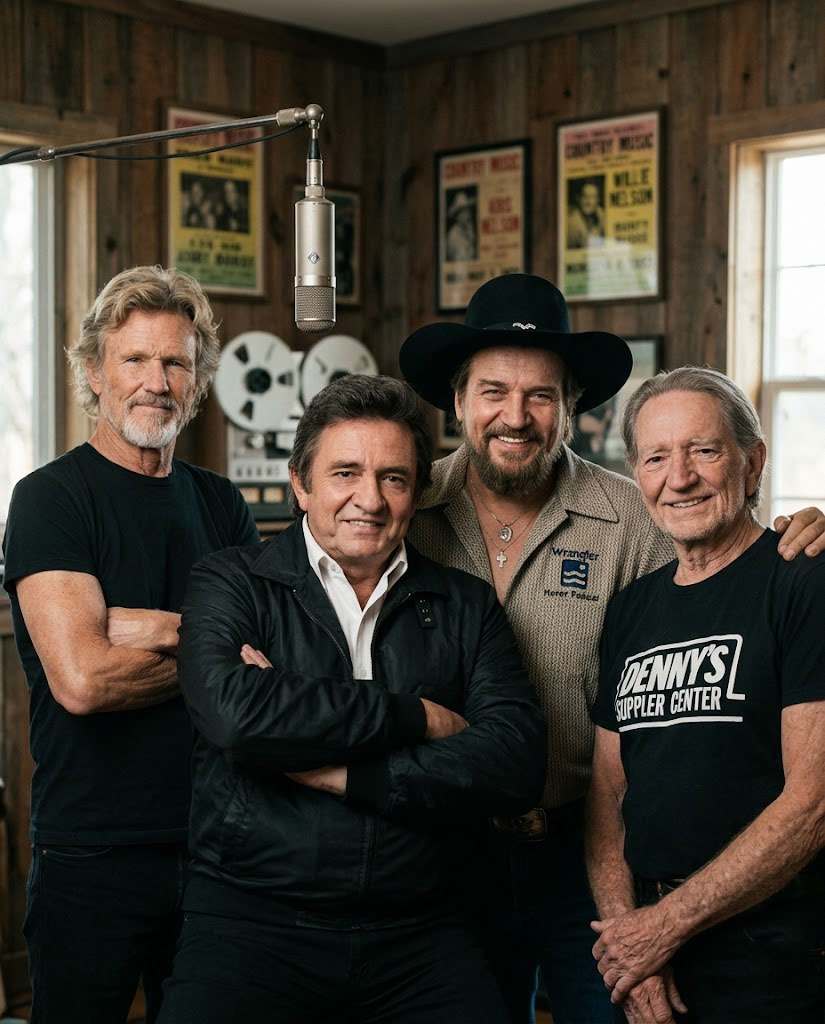
FOUR EXILED LEGENDS. ONE HAUNTING SONG. AND A DEFIANT LAST STAND THAT FORCED AN ENTIRE INDUSTRY TO REMEMBER THE TRUTH…
In the winter of 1985, Willie Nelson, Waylon Jennings, Kris Kristofferson, and Johnny Cash quietly walked into a Nashville recording studio. They laid down the vocal tracks for “Highwayman,” a song that defied every modern rule and still rocketed straight to number one.
It was not a calculated corporate reunion. It was a necessary rebellion.
THE EXILED GIANTS
By the mid-eighties, country music was rapidly changing its clothes. The powerful executives wanted younger faces, pristine studio arrangements, and upbeat songs that shined instead of bled. The raw, jagged edges of the genre were being aggressively sanded down.
Radio stations were slowly pushing their greatest troublemakers out the back door.
The establishment no longer knew what to do with the men who actually built the foundation. Willie was deemed too strange and outlaw for the new mainstream. Waylon was entirely too rough and unpredictable.
Kris wrote deep, restless poetry that asked too many uncomfortable questions. Johnny carried a heavy, lingering darkness that the bright new labels desperately wanted to forget.
Separately, they were towering, historical giants who had already survived every bitter storm the music business could throw at them. Together, their combined presence in one single room felt almost impossible.
The very machine that once sold millions of records based on their rebel scars was now asking them to quietly step aside.
THE UNPOLISHED TRUTH
They refused to just fade away. So, the four men simply stood shoulder to shoulder and pushed back.
They did not chase the new, synthesized sound to fit a fleeting radio trend. They did not soften their weathered, gravelly voices to ask the gatekeepers for permission to stay. They just brought the heavy dust and the hard miles back into the room.
Every cracked, unpolished note they sang reminded millions of listeners that music did not have to be mathematically perfect to be powerful.
When the song hit the airwaves, critics immediately called it a victory lap. They brushed it off as a wave of sweet nostalgia for aging men past their prime. But those critics fundamentally misunderstood what they were hearing.
Nostalgia wants to visit the past just to feel safe and comfortable.
This record was a deliberate, unflinching protest against the empty present. It was a stark reminder of what the genre had quietly agreed to abandon. When they traded verses, it sounded like four separate lifetimes carrying the exact same heavy soul.
THE IMMORTAL ECHO
They proved that age does not erase true authority. A voice only grows heavier and more profound after the world attempts to discard it.
The industry could easily move on, and the charts could make plenty of room for cleaner, safer sounds. But these four men proved that something raw and essential had not entirely disappeared.
It was just waiting for someone brave enough to sing it back into existence.
Sometimes the absolute truth refuses to arrive cleanly polished; it simply walks in wearing black, carrying a battered guitar, and sounding entirely immortal…