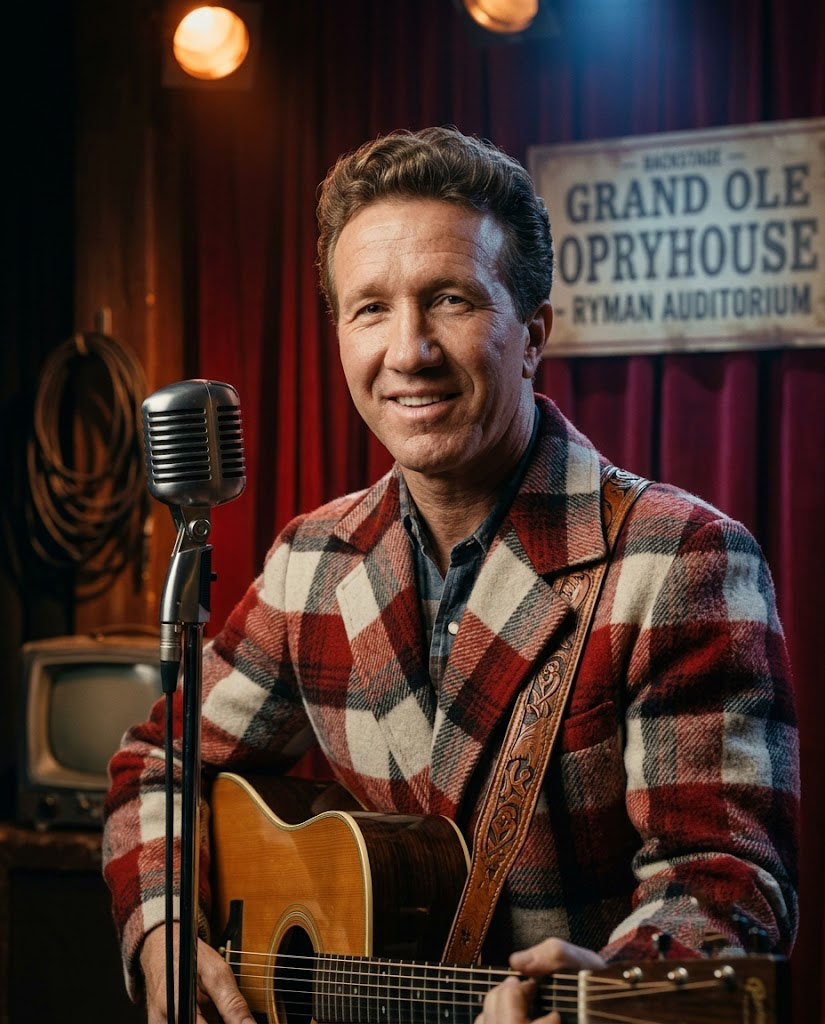
16 NUMBER-ONE HITS, 500 SONGS, AND A NASCAR LIFE — BUT A VIDEO GAME HAD TO OPEN THE DOOR BACK TO MARTY ROBBINS…
Marty Robbins should not have needed rediscovery.
He had already given country music “El Paso,” the border-town tragedy that won a Grammy and made a song feel like a Western film. He had “A White Sport Coat,” soft enough to cross into pop memory, and “My Woman, My Woman, My Wife,” tender enough to make strong men lower their eyes.
Still, time moved on.
That is what makes the story hurt.
A man with sixteen number-one hits, more than 500 recorded songs, dozens of albums, two Grammys, and a life wild enough to include NASCAR somehow drifted toward the edges of memory. Not gone. Not forgotten by the faithful.
Just quieter than he deserved.
Marty Robbins was never easy to place in one box. He could sing like a cowboy riding through dust, then turn around and sound like a man standing in a kitchen trying not to cry. He could make danger feel graceful and heartbreak feel clean.
He was a storyteller.
He was a singer.
He was a racer.
That last part still feels almost unreal. While most artists protected the image that made them famous, Marty climbed into stock cars and ran with professionals, chasing speed the way he chased songs. One mistake on a track could change everything, but he went anyway.
There was always motion in him.
Maybe that is why his voice carried so much distance. He sounded like a man who had seen the end of the road and still wanted to know what was beyond the next curve.
For years, older fans kept him close. They played the records. They remembered the way “El Paso” unfolded, verse by verse, until the whole room could see Felina, the cantina, the gunshot, the final ride.
But younger listeners often met only the shadow.
A name in history.
A song their grandparents loved.
A face on an old album cover.
That is the quiet ache of legacy. An artist can help shape the road, then be missed by the traffic rushing over it. Respect remains, but presence fades.
Then came 2010.
THE WASTELAND OPENS
Fallout: New Vegas placed “Big Iron” inside a ruined Mojave world, and suddenly Marty Robbins was not a museum piece.
He was alive again.
Millions of young players wandered through dust, neon, danger, and broken highways with his calm voice in their ears. The Arizona Ranger rode into town. Texas Red stood waiting. The big iron rested on his hip.
And somehow, a song from 1959 felt brand new.
Not because it had been modernized.
Because it still worked.
That is the miracle of a great story. It does not care how much time has passed. It waits until someone opens the right door, then walks in like it was expected all along.
Nashville had let the dust settle.
A wasteland kicked it up.
After that, young listeners began searching. They found “El Paso.” They found the Western ballads. They found the tender songs, the pop crossovers, the impossible range of a man who could sing cowboys, wives, sinners, and lonely drivers with the same honest voice.
Marty did not need to be remade.
He only needed to be heard again.
And maybe that is the strange grace in this story. A career too large for one lifetime found its way back through the most unexpected door. Not through an award show. Not through a polished tribute.
Through a digital desert.
Through a song that refused to die.
Some legends do not disappear — they only wait in the dust until a new generation hears the hoofbeats…