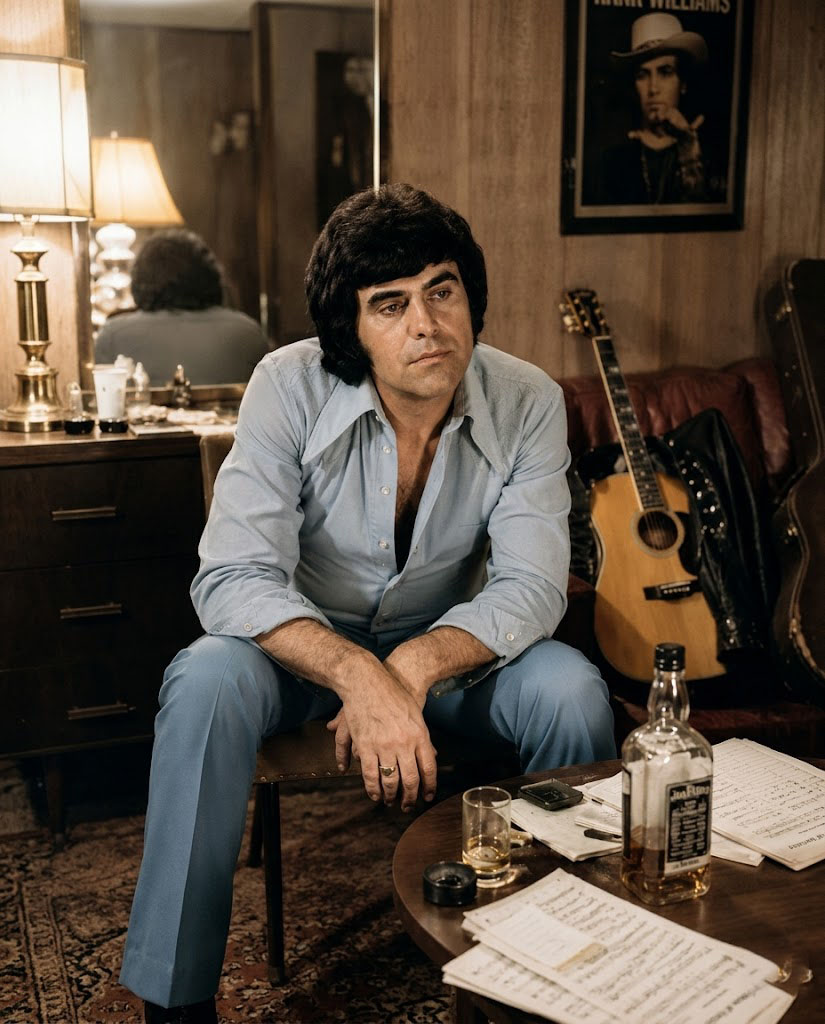
45 YEARS OLD. 1 TENNESSEE HOME. 1 VOICE THAT MADE HEARTBREAK SOUND TOO REAL. On his birthday, Mel Street — the man behind “Borrowed Angel” — closed the door on a pain his songs had been carrying all along. Some country singers make sadness sound pretty. Mel Street made it sound dangerous. He came from Grundy, Virginia, not Nashville shine. Before the records found him, he had worked with his hands — as a radio tower electrician, then running an auto body shop in West Virginia. A man who knew broken things before he ever sang about broken hearts. Then came “Borrowed Angel.” Recorded in 1969 for a small regional label, it did not storm the world overnight. It moved the hard way — station by station, listener by listener — until, by 1972, the song finally broke through. After that came the records that made Mel unforgettable. “Lovin’ on Back Streets.” “I Met a Friend of Yours Today.” “Smokey Mountain Memories.” He sang forbidden love like confession. He sang regret like it still had a hand on his shoulder. But behind the voice, the darkness was growing. Depression. Alcohol. Pressure. The career was moving forward. The man was not being saved. On October 21, 1978, Mel Street died at his home in Hendersonville, Tennessee. It was his 45th birthday. No final stage. No last spotlight. Just a silence too heavy for country music to ignore. George Jones sang at his funeral — one wounded country voice saying goodbye to another. And that is why Mel Street’s songs still ache differently. Because now, when “Borrowed Angel” plays, it does not feel like a man pretending to hurt. It feels like he had been warning us all along.

Please scroll down for the music video. It is at the end of the article! 👇👇

45 YEARS OLD. 1 TENNESSEE HOME. 1 VOICE THAT MADE HEARTBREAK SOUND TOO REAL…

Mel Street did not just sing sad country songs.

On October 21, 1978, the man behind “Borrowed Angel” died at his home in Hendersonville, Tennessee, on the very day he turned 45.

That is the part that stops the room.

Not because country music had never lost a singer young, but because Mel’s voice had already sounded like it was carrying something too heavy to name. After he was gone, those records did not feel the same.

They felt closer.

He came from Grundy, Virginia, far from the soft shine of Nashville. Before the charts, before the fans knew his name, Mel Street worked with his hands.

Radio tower electrician.

Auto body shop owner.

A man who understood broken parts before he ever made a living singing about broken hearts.

That mattered.

Because when Mel sang, there was no distance between the man and the wound. He did not make heartbreak sound pretty. He made it sound like something sitting in the passenger seat, saying nothing, staying anyway.

Then came “Borrowed Angel.”

It was recorded in 1969 for a small regional label, and it did not arrive with a parade behind it. The song had to travel the old way, from station to station, town to town, listener to listener.

Slow.

Hard.

Almost stubborn.

By 1972, it finally broke through, and country music had to pay attention to a voice that sounded too honest to ignore.

“Borrowed Angel” was a cheating song, but Mel did not sing it like a man bragging in the dark. He sang it like confession. Like regret had already entered the room before the first line was over.

That became his gift.

“Lovin’ on Back Streets.”

“I Met a Friend of Yours Today.”

“Smokey Mountain Memories.”

In another voice, those songs could have sounded reckless. In Mel’s voice, they sounded wounded. The sin was there, but so was the cost.

He knew how to make shame quiet.

He knew how to make longing feel tired.

And maybe that is why people believed him.

From the outside, the career was moving. Records were charting. His name was finding weight. Country fans were learning what a Mel Street song could do to a late-night room.

But applause does not always reach the place where a man is hurting.

Behind the voice, the private battle kept growing.

Depression.

Alcohol.

Pressure.

The road that looked like success from far away was not saving him up close.

That is the hard truth in the story. Mel Street’s pain was not only in the songs. It was behind them, under them, waiting where no spotlight could touch.

Then came his birthday.

October 21, 1978.

No final stage.

No last chorus.

Just a Tennessee home and a silence country music could not soften.

George Jones sang at his funeral, and that detail carries its own ache. One wounded country voice stood there to say goodbye to another, as if everyone in that room understood something the charts never could.

Some singers perform heartbreak.

Mel Street sounded surrounded by it.

Now, when “Borrowed Angel” plays, it feels less like a song about forbidden love and more like a warning hidden in plain sight. A Virginia boy. A body shop. A regional record that fought its way to radio. A voice that made regret feel human.

Some songs hurt because they are well sung — and some hurt because the singer was standing closer to the edge than we knew…

Post view: 10

Related Post

75 MILLION ALBUMS SOLD AND 3 ENTERTAINER OF THE YEAR AWARDS — BUT THEIR TRUE LEGACY LIVED IN JUST ONE SONG. Forget the sold-out arenas. Forget the endless number-one hits. When you want to understand who the band Alabama really was, you don’t look at their trophies. You listen to “Song of the South.” It wasn’t “Mountain Music,” their booming festival anthem. It wasn’t “Angels Among Us,” the ballad that still echoes at graduations. It was a simple story about dirt, cotton fields, and survival. It was about a father in the Great Depression who kept believing tomorrow had to be better. Bob McDill wrote the words, but Alabama gave them a heartbeat. When Randy Owen sang those lyrics, he wasn’t just performing for a microphone. He was testifying. He grew up on a farm in Fort Payne, picking cotton with his family just to get by. There was no distance between the singer and the song. He knew what it meant to watch parents struggle, to hope against the hard dirt. That kind of honesty can’t be faked in a Nashville studio. When the song hit number one in 1988, it was just another chart-topper for a massive band. But almost forty years later, it still gives people chills. It wasn’t just a song about one family in the South. It was a mirror for thousands of families who survived because they had no other choice. Beneath the fame, Alabama never stopped being four men from Fort Payne who remembered where they came from. Some bands just play country music. Alabama lived it.

HE WROTE THE ULTIMATE ANTHEM OF SOUTHERN JOY — BUT WHEN YOU REALIZE WHAT HE WAS SECRETLY CARRYING, THE BIGGEST PARTY IN COUNTRY MUSIC BREAKS YOUR HEART… When you hear the opening notes of “Jambalaya (On the Bayou),” it is impossible to sit still. Hank Williams painted a masterpiece of pure, infectious happiness. He gave us the smell of Cajun food cooking, the sound of a fiddle sawing, and the feeling of a riverside party that never ends. It became the soundtrack for generations of good times and crowded dance floors. But the man singing about all that sunshine was standing in the absolute dark. Hank recorded “Jambalaya” in the summer of 1952. By then, his body was breaking down from chronic pain, his marriage was shattering, and his personal demons were pulling him under. He was only 28 years old, but he was already running out of time. That is the devastating genius of Hank Williams. He could be carrying the crushing weight of the world on his narrow shoulders, yet he still found a way to hand us a perfect slice of joy. He wasn’t singing about the tragic life he was living. He was singing about a carefree world he desperately wished he could stay in. Less than six months after this song hit the charts, Hank passed away in the back of a Cadillac on a freezing New Year’s Day. The man is gone, but the invitation he left behind still stands. Tonight, somewhere in a crowded room or a backyard barbecue, that timeless fiddle will start to play. And for three minutes, Hank isn’t the lonely drifter anymore. He is right there by the fire, smiling, and the party never has to end.