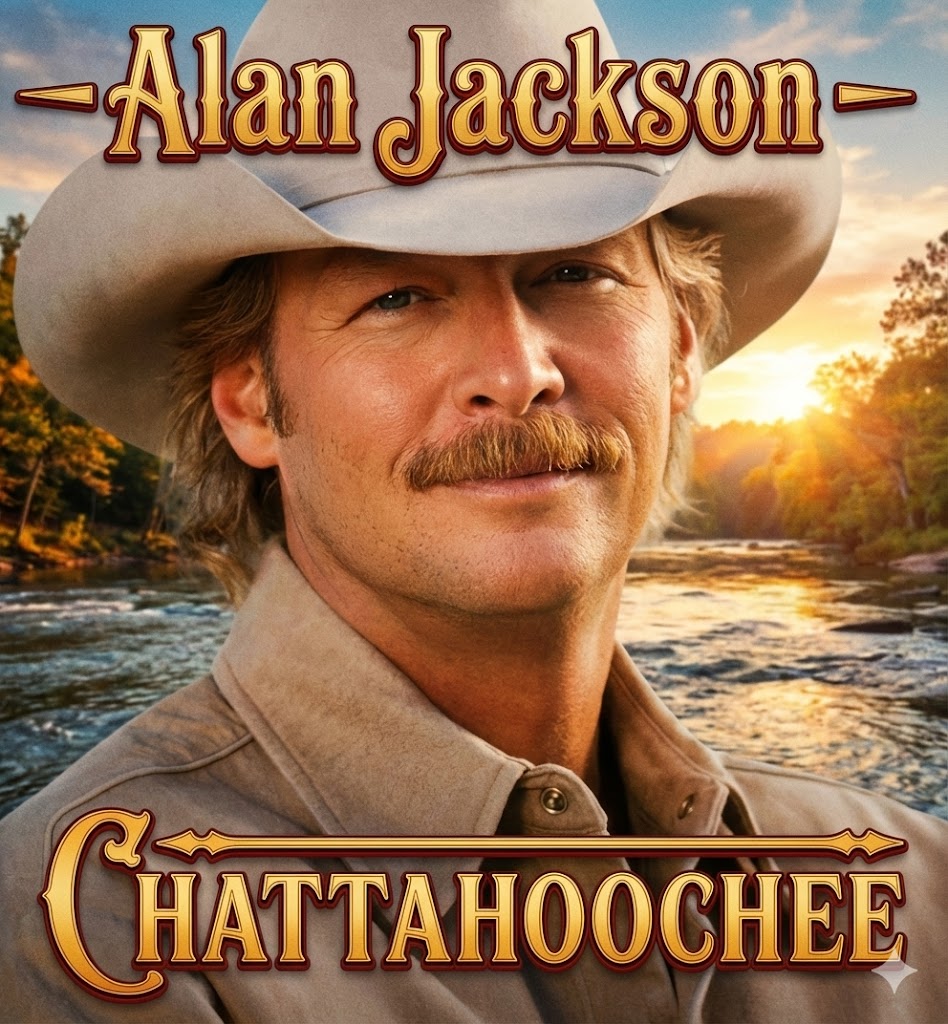
THE SONG SOUNDS LIKE SUMMER FUN — UNTIL YOU REALIZE IT IS REALLY ABOUT GROWING UP BEFORE YOU KNEW YOU WERE.
“Chattahoochee” may be one of Alan Jackson’s most joyful songs, but joy is not the only thing hiding in it.
On the surface, it is all motion.
A hot Georgia summer. Bare feet. Muddy water. A rope swing. A young man learning life in the backroads language of small towns, riverbanks, old trucks, and Friday-night freedom.
It moves so fast you can almost feel the dust behind the tires.
But beneath that grin is something deeper.
“Chattahoochee” is not just a song about having fun by the river. It is a song about that brief, golden stretch of life when youth feels endless — when every laugh is louder, every crush feels permanent, every summer night seems like it might never fade.
And then, somehow, it does.
Alan Jackson has always had a gift for making ordinary Southern memories feel like they belonged to everybody. He did not need to turn childhood into a museum piece. He could simply name a river, a truck, a hot afternoon, and suddenly thousands of people could see their own hometowns in the water.
That is the magic of this song.
The Chattahoochee becomes more than a place. It becomes a border between being a kid and becoming a man. One side is innocence. The other side is experience. And for a few bright minutes, Jackson lets us stand right in the middle, laughing too hard to notice the years moving underneath us.
The human detail is what makes it last.
Not some grand speech.
Just a riverbank.
A pair of jeans drying in the sun.
A radio turned up too loud.
The feeling of being young enough to believe the whole world could fit inside one county line.
For many listeners, that is where the ache comes in. Because “Chattahoochee” does not sound sad, yet it reaches the part of us that knows we cannot go back. We can remember the friends, the trucks, the first loves, the reckless courage, the long evenings when nobody wanted to go home.
But we cannot stand in that same water twice.
That is why the song still works all these years later. It carries the smile and the sting at the same time. It reminds us that some of the happiest memories hurt only because they were real, and because they passed before we understood how much we would miss them.
Alan Jackson sings it with that easy confidence that made him feel less like a star looking down and more like the guy who grew up down the road. He was never just selling a picture of country life. He was bringing people back to the smell of cut grass, lake water, gasoline, and Saturday nights that ended too late.
And maybe that is why “Chattahoochee” became bigger than a hit.
It became a time machine.
For some, it brings back Georgia. For others, Texas, Alabama, Kentucky, Tennessee, or a town too small to make a map. It brings back somebody’s first truck, somebody’s first kiss, somebody’s best friend before life scattered everyone in different directions.
The song does not ask us to mourn youth.
It lets us dance with it for three minutes.
And then, when the music fades, we understand what Alan Jackson has been telling us all along: growing up does not always happen in a serious room. Sometimes it happens laughing by a muddy river, sunburned and alive, while the future waits just beyond the next bend.
A river keeps moving.
So does a life.
But every now and then, a song can carry us back to the water.