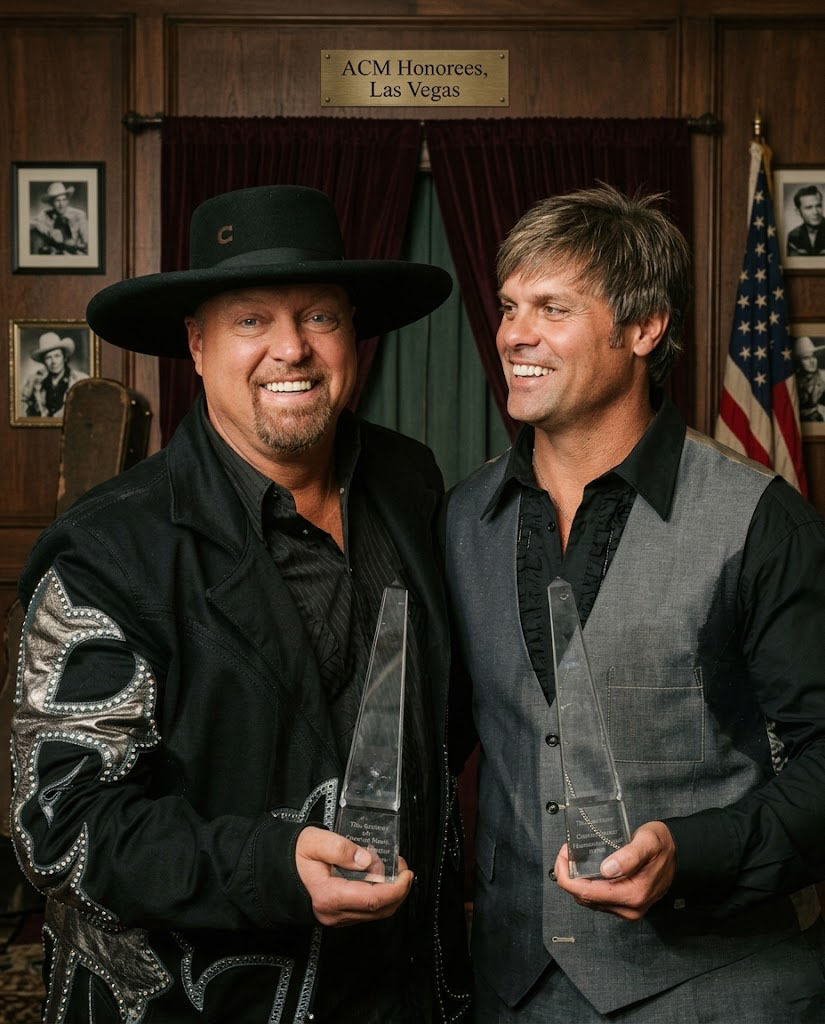
BEFORE MONTGOMERY GENTRY HAD A RECORD DEAL, EDDIE MONTGOMERY WAS ALREADY KEEPING TIME AT 13…
He was not sitting in a Nashville office, waiting for someone to discover him.
He was behind the drums in Kentucky, playing in his parents’ band, learning country music from the floorboards up.
At 13, Eddie Montgomery was already part of Harold Montgomery and the Kentucky River Express, the family band led by his father. That detail matters because Montgomery Gentry did not begin as a polished industry idea.
It began in rooms that smelled like work.
Small stages. Late nights. People talking over the first song. A young drummer watching grown men carry amplifiers like they were carrying a living.
Eddie learned early that country music was not only about singing the truth.
It was about staying with it.
His father, Harold, played the honky-tonk circuit, and the Montgomery house seemed to have music moving through it like weather. Eddie did not have to chase country music from far away.
It was already at the kitchen table.
His brother, John Michael Montgomery, grew up in that same sound. Before John Michael became a country star in his own right, before the ballads and radio success, he was another Montgomery boy shaped by rehearsals, road talk, and the strange patience of working musicians.
They were not raised around silence.
They were raised around songs trying to become something.
Eddie’s first job was simple, but not easy.
Keep time.
Watch the room.
Play the song.
That kind of beginning leaves a mark. A drummer has to listen before he leads, and Eddie was learning how a band breathes before most kids have figured out who they are.
Years passed. Bands changed. Names came and went.
Early Tymz.
Young Country.
The kind of chapters most fans only hear about later, after the lights are brighter and the story has been cleaned up for a record label biography.
But those years were not wasted.
They were the foundation.
John Michael eventually stepped into his solo path. Troy Gentry came into the circle, too, carrying his own voice, his own grit, his own hunger for something that did not feel borrowed.
Eddie stayed close to the band sound.
That is the quiet sacrifice in this story.
He was not the first Montgomery brother crowned by country radio. He kept working through the rough middle, through changing lineups, small chances, and nights where the crowd did not owe anybody applause.
Then Eddie and Troy found the shape that fit.
Montgomery Gentry did not sound like two strangers placed together for a marketing plan. They sounded like men who had already spent years playing to people who could spot a fake before the first chorus.
In 1999, “Hillbilly Shoes” arrived.
It stomped in.
The song carried Kentucky attitude, Southern-rock muscle, and the memory of barrooms where music had to earn its place. It did not sound carefully assembled.
It sounded lived in.
That was the beauty of it. By the time the record deal found Eddie Montgomery, the road had already found him, tested him, and taught him what kind of music could hold up under noise.
The drums came first.
Before the fame, before the duo, before the name Montgomery Gentry meant something on a ticket, there was a boy keeping time in his father’s band.
And maybe that is why the sound stayed so grounded.
Some legacies do not begin when the world starts listening — they begin in the rooms where almost nobody is paying attention…