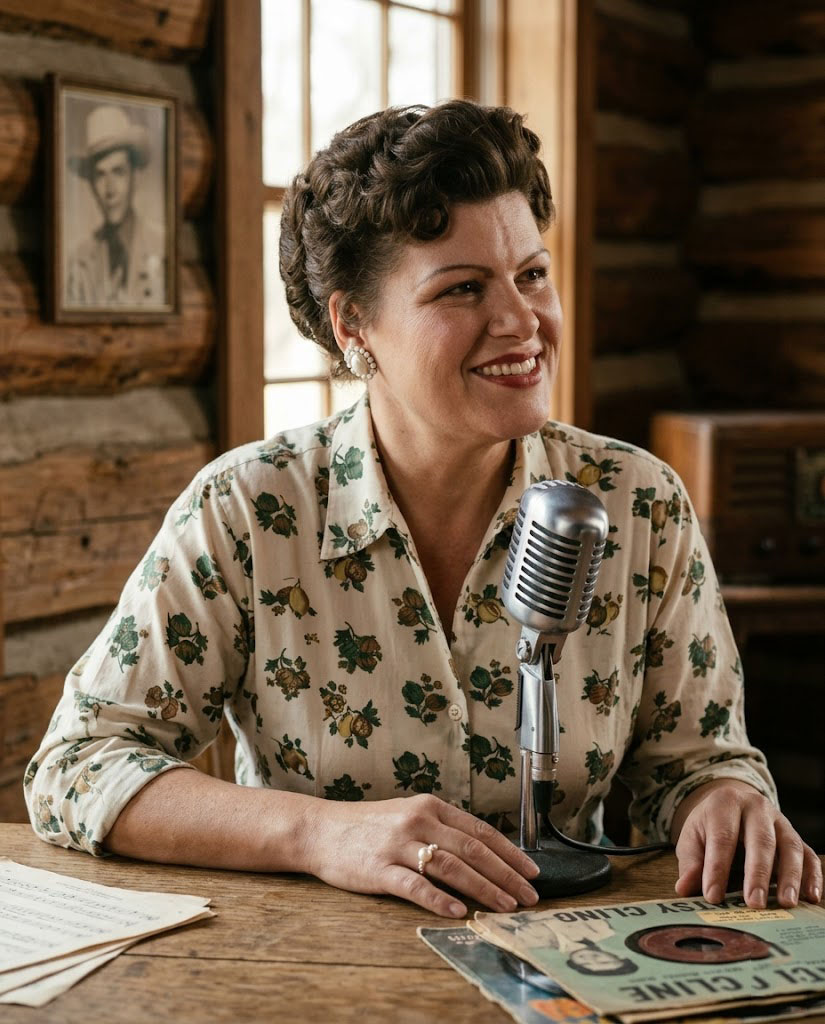
“WALKIN’ AFTER MIDNIGHT” WAS THE SONG PATSY CLINE NEVER WANTED TO RECORD. THEN ONE PERFORMANCE TURNED HER INTO A STAR OVERNIGHT…
In 1957, Patsy Cline was still fighting to find her place in country music.
She had the voice.
Everybody knew that.
But success had not arrived yet, and Patsy carried strong opinions about the kind of artist she wanted to become. She loved traditional country music — hard truths, steel guitar, heartbreak that sounded lived-in. She did not want lightweight pop songs shaping her identity before her career even began.
Then the label handed her Walkin’ After Midnight.
She hated it immediately.
To Patsy, the track sounded too polished, too pop-oriented, too far removed from the country music she respected. She reportedly fought against recording it at all because she feared the song would soften the image she wanted audiences to take seriously.
At the time, nobody could have guessed how wrong that fear would become.
After heavy pressure from producers and executives, Patsy finally agreed to perform the song on national television during an appearance on Arthur Godfrey’s Talent Scouts.
That moment changed her life forever.
When she stepped beneath the bright studio lights, something happened that nobody inside the room fully expected. Patsy did not sing “Walkin’ After Midnight” like a disposable crossover tune. She pulled the song somewhere deeper.
Suddenly, the melody carried loneliness.
Desire.
Midnight exhaustion.
Her voice wrapped around every lyric with a smoky ache that made the song feel older, sadder, and infinitely more human than it looked on paper. What had once sounded lightweight now felt intimate and dangerous in the best possible way.
The audience exploded afterward.
The applause meter on the show reportedly climbed so high it maxed out completely. Overnight, Patsy Cline transformed from a struggling singer into one of the most talked-about new voices in America.
And the irony stayed attached to the song forever.
The very track she feared would take her too far from country music became the foundation of her legend inside it.
Released later in 1957, “Walkin’ After Midnight” crossed from country into pop radio, helping reshape what country music itself could sound like. At a time when the genre often stayed separated from mainstream audiences, Patsy’s recording quietly broke the walls down.
But what truly made the song immortal had less to do with genre.
It was her voice.
Patsy possessed a rare ability to make loneliness sound elegant without ever making it feel fake. She did not oversing emotion. She let it settle naturally into the performance, almost as though she were carrying private heartbreak no one else in the room fully understood.
That restraint became her signature.
Even now, decades later, “Walkin’ After Midnight” still feels strangely alive because Patsy never treated it like a commercial product. She treated it like a confession whispered after midnight when the world finally grows quiet enough to hear yourself think.
And listeners believed her because she sounded believable.
Not polished into perfection.
Not manufactured for radio.
Real.
The song also revealed something deeper about Patsy Cline herself. Great artists sometimes recognize emotion more honestly than they recognize strategy. She worried the song was not country enough because she focused on style. But audiences focused on truth instead.
And truth travels further than categories ever do.
That is why “Walkin’ After Midnight” never stayed trapped inside one era or one genre. It became timeless because Patsy filled it with something larger than music industry labels.
She filled it with longing.
Patsy Cline thought “Walkin’ After Midnight” might weaken her country roots. Instead, she sang it so honestly that she changed country music forever…