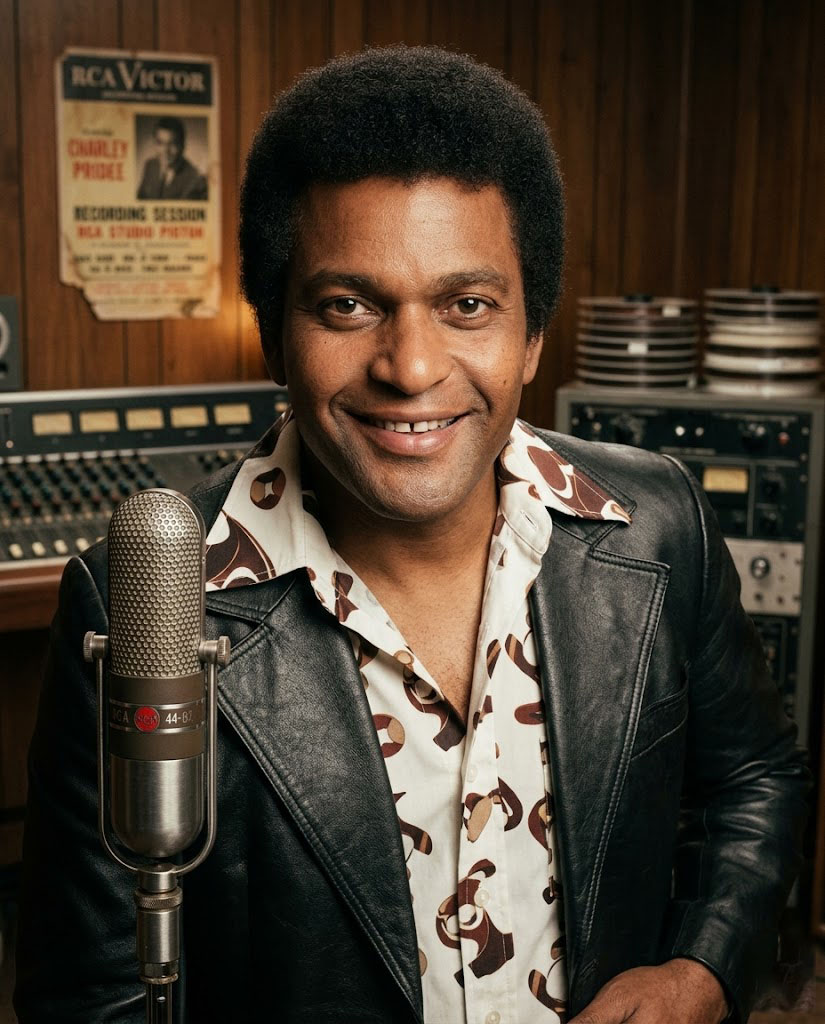
THEY LOVED THE VOICE ON THE RADIO — BUT THE FIRST TIME CHARLEY PRIDE WALKED ONSTAGE, SOME CROWDS WENT COMPLETELY SILENT…
Before the applause came, there was hesitation.
By the late 1960s, country audiences across America already knew the voice. Warm. Easygoing. Deeply familiar. Songs flowing through truck radios and kitchen speakers with the kind of honesty people instantly trusted.
Then Charley Pride stepped into the spotlight.
And suddenly, the room had to confront something many of them were not prepared for.
The voice belonged to a Black man from Mississippi.
For a few long seconds, some crowds did not know how to react. You could feel it hanging in the air — confusion, discomfort, curiosity, judgment. In country music at that time, the boundaries were rarely spoken aloud, but everybody understood they existed.
Charley understood it too.
That silence could have hardened him. It could have turned every performance into a fight. But Charley Pride chose something far more difficult.
Restraint.
He never walked onstage demanding acceptance. Never tried to lecture the audience into changing. Instead, he leaned toward the microphone and let the songs speak first.
And slowly, night after night, the rooms began to soften.
That was the quiet power of Charley Pride. He did not kick doors down with anger. He opened them with consistency, grace, and undeniable talent. Once he started singing, skepticism often dissolved into something else entirely.
Respect.
Long before country music embraced broader conversations about representation, Charley was already standing in front of audiences proving the genre belonged to more people than they had imagined.
Not through speeches.
Through songs.
“Kiss an Angel Good Mornin’” became one of the clearest examples. The song felt bright and effortless, almost conversational. There was no bitterness inside it. No attempt to force history into the room.
Just warmth.
And somehow, that warmth changed people more effectively than confrontation ever could.
Backstage, industry executives had worried endlessly about whether audiences would accept him. Some radio stations hesitated at first. Promoters feared backlash. There were moments when his records were sent out without publicity photos because labels wanted listeners to hear the music before seeing the man.
Imagine carrying that knowledge onto a stage every night.
Imagine hearing applause for your voice… then feeling uncertainty the moment you appeared beneath the lights.
Still, Charley kept walking forward calmly.
There is something remarkable about the discipline that required. He understood he was carrying more than his own career each time he stepped onto those stages. Every performance became part of a larger conversation about who country music was allowed to belong to.
But he never let the weight show too heavily.
That may be why audiences eventually trusted him so deeply. Charley Pride never performed with visible resentment, even when he had every reason to. He carried himself with steadiness instead. The kind of quiet confidence that slowly makes prejudice feel smaller and smaller sitting in the same room.
Over time, the silence changed.
The hesitation disappeared first.
Then came admiration.
Then standing ovations.
Soon, Charley Pride was no longer being discussed as a novelty or exception. He became exactly what he always deserved to be — one of country music’s defining voices. A star with dozens of hit songs, major awards, and a place permanently carved into the genre’s history.
But the emotional weight of his story lives in those earlier moments. The first walks onto unfamiliar stages. The first seconds of silence before audiences decided what to do with him.
And the calm way he answered every one of those moments with music instead of bitterness.
Some artists entertain crowds. Charley Pride quietly changed what crowds believed was possible before they even realized it was happening…