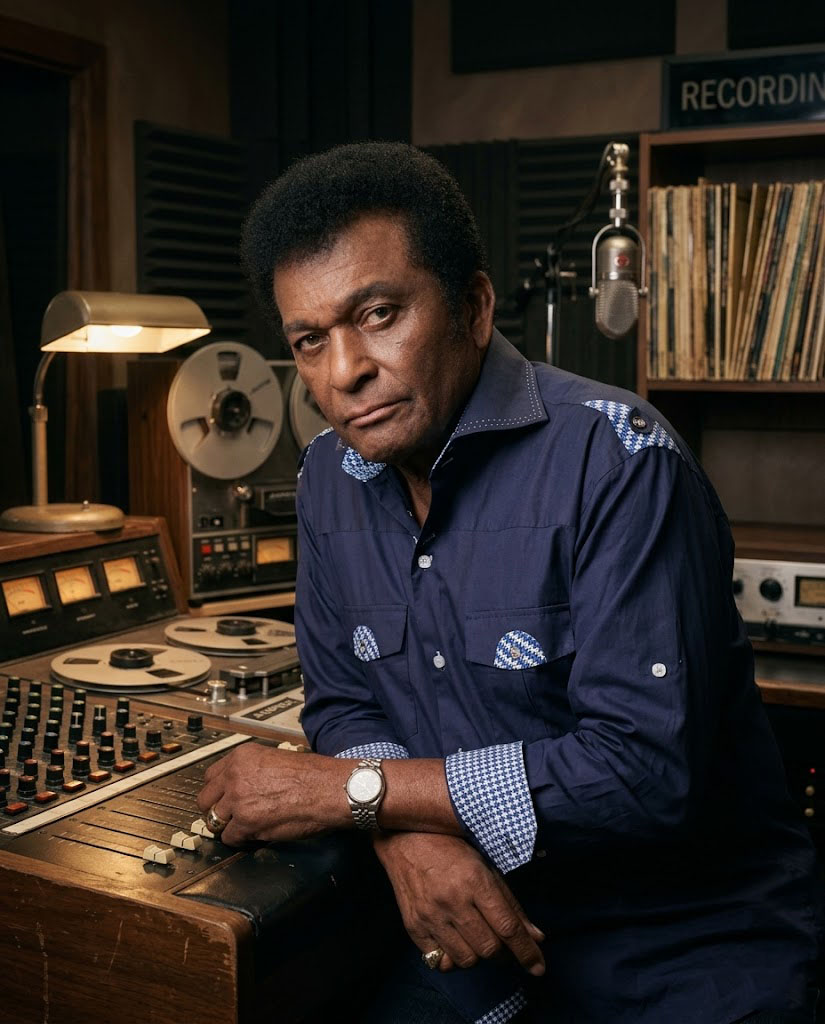
HE WALKED ONTO THE CMA STAGE LIKE IT WAS JUST ANOTHER NIGHT — AND COUNTRY MUSIC DIDN’T KNOW IT WAS WATCHING GOODBYE…
On November 11, 2020, Charley Pride stood beneath the lights one last time and sang the song that had carried him across generations.
He was there to receive the Willie Nelson Lifetime Achievement Award, but before the honor was placed in his hands, he sang “Kiss an Angel Good Mornin’” with Jimmie Allen. The room heard a classic. Time heard something else.
A final bow.
There was no farewell tour behind it.
No announcement that this would be the last time.
No warning hidden in the applause.
Charley Pride simply stepped forward with the same calm dignity that had followed him through one of the hardest and most important careers country music has ever known.
THE LAST SONG
“Kiss an Angel Good Mornin’” did not need an introduction.
By then, it had lived in pickup trucks, kitchens, roadside diners, old radios, and the soft places where country songs become family memory. People knew it before the first line settled.
Pride’s voice carried age that night.
But it also carried steadiness.
He did not sing like a man trying to prove he still belonged. He sang like a man who had already earned his place, long ago, note by note, room by room, in front of crowds that did not always know what to do with him at first.
Charley Pride had become one of country music’s greats without making bitterness his public language.
He was the first Black member of the Country Music Hall of Fame, an Opry member, a Grammy winner, and one of the genre’s most successful voices. But numbers alone never explained him. They only measured what grace had already built.
He carried history without turning every step into a speech.
That was his way.
Onstage with Jimmie Allen, the moment quietly widened. One Black country artist who had broken doors open stood beside another who had walked through doors still heavy with old weight.
No lecture was needed.
The picture said enough.
When the song ended, Pride did not stretch the moment into something dramatic. He smiled, accepted the love in the room, and let the applause rise around him.
Then life moved forward, as it always does before it changes.
One month later, on December 12, Nashville learned Charley Pride was gone.
Only then did that performance become impossible to watch the same way. The song was no longer just a tribute to his career. It had become the last visible act of a man who gave country music more than hits.
He gave it proof.
Proof that a voice could move past prejudice.
Proof that dignity could be stronger than noise.
Proof that country music, at its best, belongs to anyone who can tell the truth and make people feel less alone.
Maybe that is why the goodbye still feels so heavy.
It was not wrapped in fireworks.
It did not ask the world to stop.
It came as a familiar chorus, a gentle smile, a shared stage, and a man standing there with nothing left to prove.
Charley Pride did not leave country music with a speech — he left it with a song still warm in the room, and grace still walking beside him…