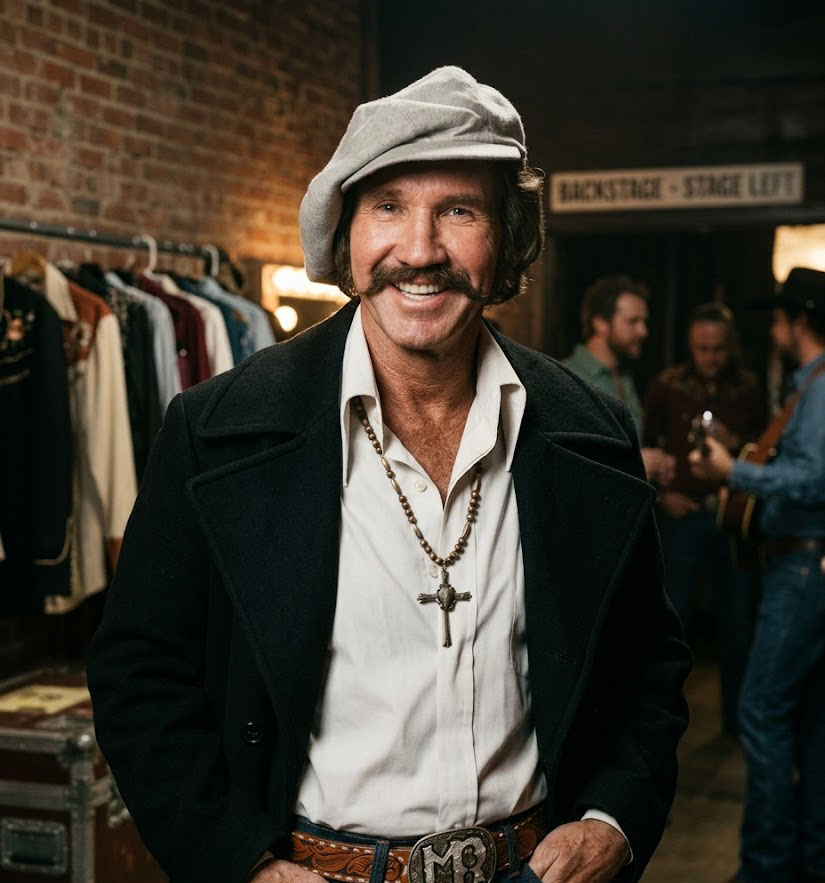
ON DECEMBER 8, 1982, COUNTRY MUSIC LOST MORE THAN A VOICE — IT LOST A MAN WHO COULD TURN A SONG INTO A MOVIE…
Marty Robbins was only 57 when his heart gave out, and the shock cut deep because he was not a legend fading quietly into memory.
He was still here.
Still singing.
Still writing.
Still stepping onto the Grand Ole Opry stage with that calm smile and a voice that seemed to carry desert dust, heartbreak, and distance in the same breath.
His death mattered because Marty Robbins was never just another country singer. He was one of the rare artists who could take three minutes, a handful of chords, and a few plain words, then open an entire world inside the listener’s mind.
He did not just perform stories.
He let people enter them.
When the news came on December 8, 1982, country music felt the loss in a way numbers could not explain. Yes, there were hit records. Yes, there were awards, stage lights, and years of applause.
But Marty’s real gift was stranger than fame.
He made songs feel visible.
With “El Paso,” you did not simply hear about a cowboy and a woman named Feleena. You could almost see the dust outside Rosa’s Cantina, the horse turning back toward danger, the border town waiting like fate at the end of the trail.
With “Big Iron,” the whole room seemed to change shape. Suddenly there was an Arizona town, a feared outlaw, and a stranger walking slowly toward the hour everyone knew was coming.
No rush.
No shouting.
Just fate moving in boots.
With “Devil Woman,” mystery sat inside every line, dark and smooth, like a shadow passing across a doorway. Even his softer songs carried scenes, not just feelings. A bar. A road. A room where someone had been left alone too long.
That was Marty Robbins.
He made country music cinematic before anyone needed a screen.
And maybe that is why his passing felt so hard to believe. Some singers seem tied to a moment in time, but Marty’s voice always felt like it was traveling. Across deserts. Across highways. Across the long quiet spaces where people think about love, regret, and the choices they cannot undo.
He was not only heard.
He arrived.
Fans knew him as the storyteller, but there was more beneath that. Marty had lived with restlessness in his bones. He loved the Opry, but he also loved racing cars. He could stand in a spotlight one night and chase speed the next, as if one life was never wide enough to hold all the roads inside him.
That movement lived in the music.
His songs rarely stood still. Someone was riding away. Someone was coming back. Someone was waiting for a showdown, a goodbye, a last chance, a final turn toward home.
Then, suddenly, Marty himself was gone.
The stages felt quieter.
The radios answered the only way they could. They played him again. In kitchens, trucks, diners, and late-night rooms, that voice returned as if the world needed proof that a storyteller does not vanish all at once.
The body leaves.
The worlds remain.
More than forty years later, those worlds still rise when the first notes begin. The desert comes back. The town holds its breath. Rosa’s Cantina opens its door. A rider appears in the distance, and somehow the old story feels new again.
Some voices sing a song and leave it behind; Marty Robbins built places inside them, and we are still walking through those doors…