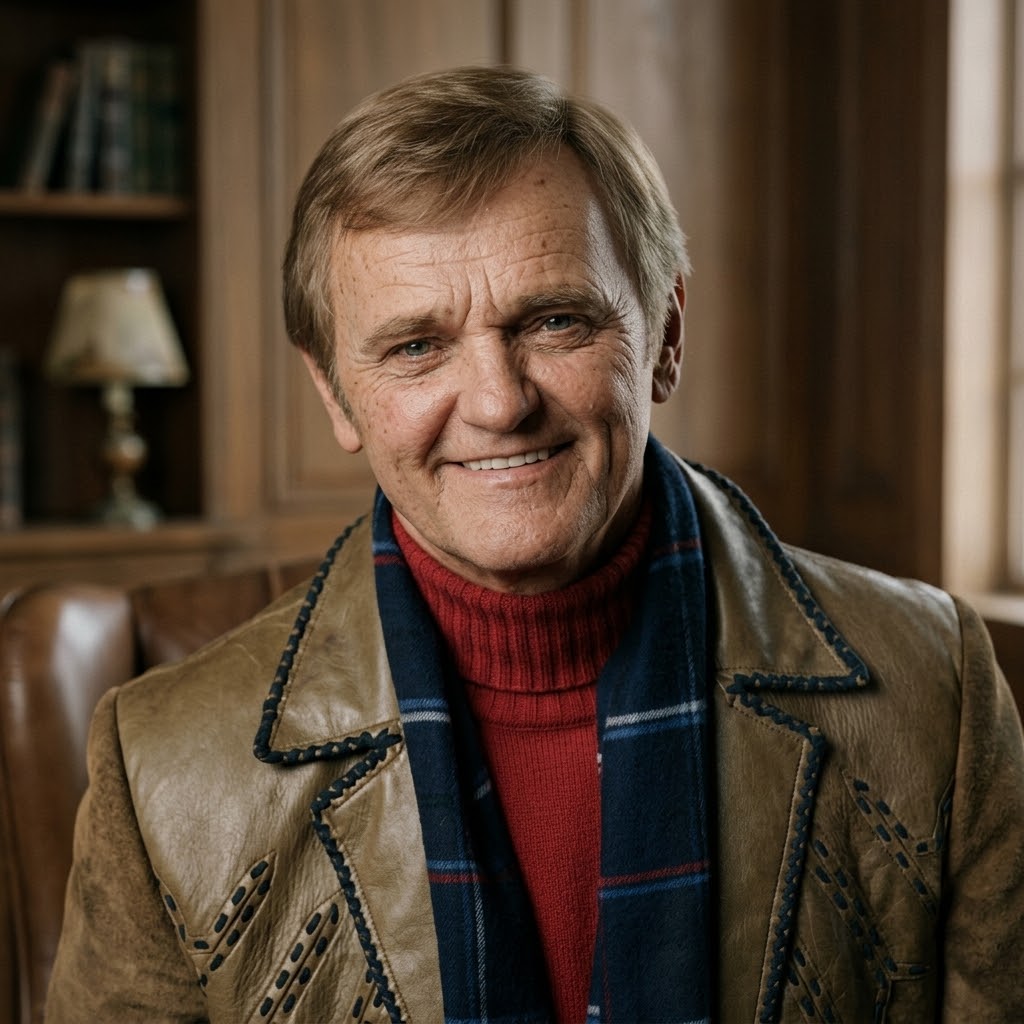
ON SEPTEMBER 1, 2008, EMPHYSEMA QUIETLY TOOK HIM AT 71 — BUT IT TOOK NASHVILLE NINE MORE YEARS TO ADMIT THEY HAD LOST A GENIUS. Jerry Reed could do almost everything. He wrote chart-topping hits. He played the guitar so fast and loose it sounded like his fingers were running from the law. He was the man who made Elvis Presley demand his songs, and the only guy who could make Burt Reynolds look even funnier just by standing beside him. He took home three Grammys, recorded dozens of albums, and created a signature guitar style that nobody could ever truly replicate. But that was the tragedy of Jerry Reed. When a man makes greatness look that effortless, the world starts taking it for granted. They saw the charm. They heard the wild, easy laughter. And because he was so busy entertaining them, they completely missed how fiercely serious his talent really was. When his failing lungs finally gave out on that Monday morning, he left the world in a quiet stillness—the exact opposite of how he had lived. That November, the CMA Awards paid tribute. Stars stood on stage and called him a larger-than-life legend, one of the greatest country music had ever seen. And yet, the heaviest door in town remained firmly shut. The Country Music Hall of Fame kept him waiting. It took nine years. Nine years after his heart stopped, the industry finally gave him the place he had earned decades prior. In 2017, his daughters stood on stage to accept the overdue honor. Bobby Bare delivered the induction. Ray Stevens sang “When You’re Hot, You’re Hot” to a room where the applause carried the heavy, unmistakable weight of regret. Burt Reynolds followed him into the dark just a year later, taking the last piece of that golden era’s laughter with him. But put on “East Bound and Down” today. Listen to the speed, the humor, and the sheer, undeniable confidence. He was never just a comedian passing through. He was a man so vibrantly alive, it took the industry nearly a decade to realize he had never actually left the room.

Please scroll down for the music video. It is at the end of the article! 👇👇

HE GAVE THEM THREE GRAMMYS AND DECADES OF LAUGHTER — BUT WHEN HIS HEART FINALLY STOPPED AT 71, NASHVILLE KEPT THE INDUSTRY’S HEAVIEST DOOR LOCKED FOR NINE MORE YEARS.

Jerry Reed was a heartbreaking victim of his own effortless charm.

To the millions watching on television or sitting in crowded movie theaters, he was the wild, smiling sidekick.

He was the charismatic “Snowman.” The only man on earth who could stand next to the towering presence of Burt Reynolds and somehow steal the entire scene just by flashing a grin.

But because he was always cracking a joke, the world made a tragic mistake.

They completely took his staggering musical genius for granted.

Behind the loud shirts and the easy laughter was a terrifyingly talented savant. He played the guitar with such blistering, frantic speed that his fingers looked like they were constantly running from the law.

His signature “claw” picking style was so complex, so entirely his own, that even the most elite session musicians in Nashville couldn’t figure out how to replicate it.

When Elvis Presley tried to record “Guitar Man,” the studio band couldn’t capture the groove. The King actually had to halt the session and demand they track down Jerry Reed himself.

Jerry walked in, plugged his guitar in, and laid down a track so iconic it changed history. Elvis knew exactly what the rest of the industry kept forgetting: nobody else could make a piece of wood and wire sound like a thunderstorm.

But when a man makes greatness look like a casual Friday night, the establishment often forgets to hand him his crown.

On September 1, 2008, after years of struggling for every breath, emphysema quietly took him at the age of 71.

The man who lived his entire life at a hundred miles an hour, filling every room with noise and joy, slipped away in complete, devastating stillness.

A few months later, the award shows paid their standard tributes. Superstars stood under the glowing lights and called him a larger-than-life legend.

And yet, the most important door in town remained firmly shut. The Country Music Hall of Fame kept him waiting in the dark.

It took them nine long years.

Nine years of silence before the industry finally admitted what the fans had known all along.

In 2017, his daughters bravely stood on stage to accept the desperately overdue honor.

Bobby Bare delivered the induction. Ray Stevens sang “When You’re Hot, You’re Hot.”

And as the applause washed over the auditorium, it carried the heavy, unmistakable weight of collective regret. The room finally realized they had overlooked a monumental giant simply because he preferred to make them smile.

Burt Reynolds followed him into the dark just a year later, taking the very last piece of that golden era’s reckless joy with him.

But Jerry’s ghost refuses to be quiet.

Put on “East Bound and Down” on a long stretch of empty highway today. Roll the windows down and listen to the sheer, undeniable fire pouring through those strings.

He was never just a comedian passing through the frame.

He was a man so vibrantly, intensely alive, it took the world nearly a decade to realize he had never actually left the room.


Related Post

ON THIS DAY IN 1966, DOLLY PARTON MARRIED CARL THOMAS DEAN IN RINGGOLD, GEORGIA. NO PRESS, NO CROWDS — JUST A GIRL WHO WAS ABOUT TO CONQUER THE WORLD, QUIETLY MARRYING THE BOY FROM THE LAUNDROMAT. We know her as the ultimate global icon. The rhinestones. The towering hair. The voice that wrote “Jolene” and “I Will Always Love You.” For nearly six decades, Dolly Parton has belonged to the world. But behind the blinding lights of superstardom lies a completely different reality. It started on her very first day in Nashville in 1964. She was just a girl with a cardboard suitcase, washing her clothes at the Wishy-Washy Laundromat. A tall, quiet man drove by in a white Chevy pickup. He hollered at her to get out of the sun so she wouldn’t burn her fair skin. Two years later, they drove down to a small church in Ringgold, Georgia. There were no paparazzi. No massive guest list. Just Dolly, Carl, her mother, and the preacher. In a music industry famous for breaking hearts and tearing families apart, their survival is nothing short of a miracle. Carl never wanted the spotlight. And Dolly never made him stand in it. She would go out, wear the sequins, sing for millions, and build an empire. But when the curtain fell, she took off the wig and went home to the only man who loved her before she was anybody. She gave the public her voice, her brilliant mind, and her endless generosity. But she kept her heart fiercely protected behind closed doors. Today, she is still shining, still standing, and still reminding us of something profoundly beautiful. Sometimes, the most breathtaking thing about a superstar isn’t the monumental fame they build. It’s the quiet, unshakable love they manage to keep entirely for themselves.

IN 1963, HE WAS TURNED AWAY FROM A NASHVILLE STUDIO SIMPLY BECAUSE OF HIS SKIN COLOR — BUT A STRANGER’S HANDSHAKE THAT DAY SPARKED A SILENT 50-YEAR RITUAL. Long before he became the first Black superstar in country music, Charley Pride was just a young man chasing an impossible dream. Nashville in 1963 was a town of heavily guarded doors. When a studio refused to even let him audition because of his race, a crushed and humiliated Charley walked toward the exit, feeling completely invisible. Suddenly, an older janitor stopped him. The stranger reached out his hand and said, “Son, somebody’s gotta be first.” That single act of kindness saved a legend’s spirit. Charley would go on to shatter every barrier in the industry, selling over 70 million records and giving the world immortal hits like “Kiss an Angel Good Mornin'” and “Is Anybody Goin’ to San Antone.” He reached the pinnacle of his career, eventually winning the CMA Entertainer of the Year. But he never let the blinding lights make him forget the dark days. For the next fifty years, just minutes before stepping onstage, Charley kept a quiet, unexplainable ritual. He would walk down the line of his crew—stopping at every single guitarist, soundman, and young roadie. He shook every hand, looked them dead in the eye, and whispered, “Glad you’re here.” Inside his jacket pocket, he always carried a worn, folded piece of paper. It held a short list of people who gave him a chance when the rest of the world refused. And at the very bottom of that faded list, read in absolute silence before every single show, was one line: The janitor in Nashville. Charley Pride passed away in 2020, but his legacy is so much more than his golden baritone. He survived an industry that tried to keep him out, and spent half a century making sure no one who stood in his shadow ever felt unseen.