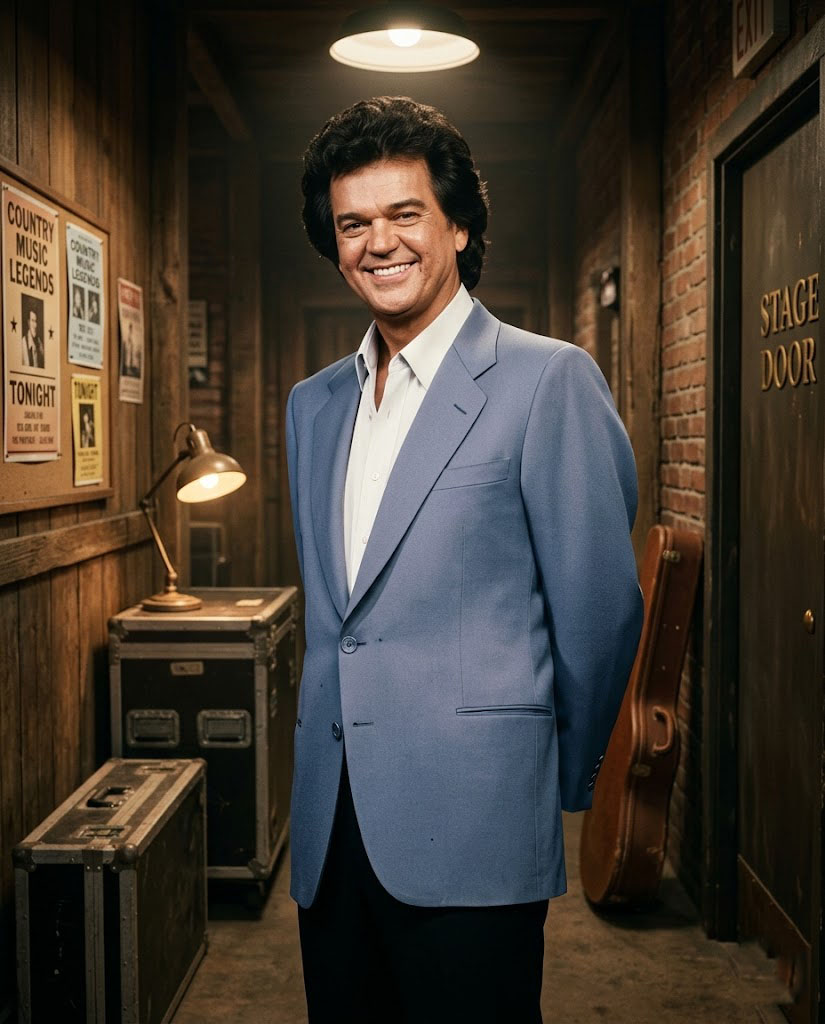
A RANDOM MAP. TWO TINY TOWNS. AND A NAME THAT WOULD OUTLIVE THE MAN WHO FOUND IT…
Before Conway Twitty became Conway Twitty, he was Harold Lloyd Jenkins, a young singer staring at a future that still had no shape.
The event was simple, almost too small for a legend. Harold needed a stage name, so he looked at a map of the United States and found two ordinary places: Conway, Arkansas, and Twitty, Texas.
Put together, they became something else.
Conway Twitty.
That name mattered because it did more than sound good on a record label. It gave a hungry young artist a door to walk through at a time when radio could make or break a dream in three minutes.
Before that moment, Harold Lloyd Jenkins had the voice. He had the hunger. He had the restless belief that music might carry him farther than the life he had known.
But in the 1950s, a singer needed more than talent.
He needed something people could remember.
Harold Lloyd Jenkins was a solid name, honest and human. But it did not strike like a match. It did not leap from a jukebox or sit in the mind after a DJ said it once between songs.
So he went looking.
Not in a boardroom.
Not through a manager’s grand design.
Just a young man with a map, searching across state lines for a name that sounded like the future he could almost hear.
There is something quietly American about that image. A map spread open. Town names scattered like chances. A singer trying to choose what the world would call him before the world had decided whether to listen.
Then came Conway.
Then came Twitty.
Separate, they were only dots, easy to pass over. Together, they had rhythm, bite, and a little mystery. The name sounded like it already belonged under stage lights.
It sounded impossible to forget.
That was the turn. Not dramatic. Not loud. Just one small private decision that would follow him for the rest of his life.
Harold Lloyd Jenkins stepped into the name, and slowly, the name began stepping back into him.
Of course, a name alone could never do the singing. It could not hold a note, sell a feeling, or make a lonely listener lean closer to the radio. The voice still had to prove itself.
And it did.
Conway Twitty became attached to warmth, longing, smooth phrasing, and a kind of confidence that never needed to brag. The invented name stopped feeling invented at all. It began to feel inevitable, as if it had been waiting for him somewhere between Arkansas and Texas all along.
That is the strange beauty of the story.
It was random, but not empty.
A map did not create the man. It simply gave him a shape the world could recognize. Behind that shape was still Harold — the boy with ambition, the singer with something to prove, the person willing to leave one version of himself behind.
Maybe every dream asks for that kind of leaving.
A name can be a costume. It can also be a key.
For Conway Twitty, it became a key that opened rooms Harold Lloyd Jenkins had only imagined. The crowds came later. The hits came later. The legend came later.
But first, there was silence, paper, and a young man searching for a word that sounded like destiny.
Sometimes a life changes not when the world calls your name, but when you finally choose the name you are brave enough to answer to…