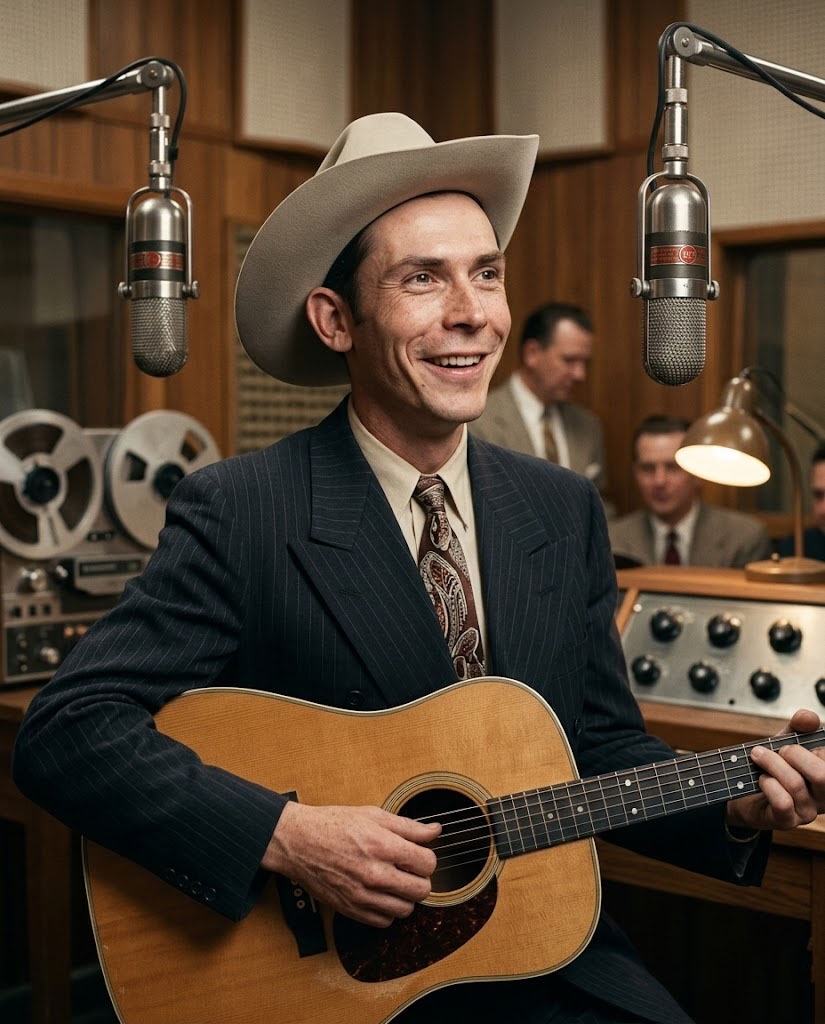
“YOU WIN AGAIN” WASN’T JUST A SONG — IT WAS HANK WILLIAMS ADMITTING DEFEAT WITH HIS HEART STILL IN HIS HANDS…
Some heartbreak songs plead for mercy, but this one simply stands in the room, looks at the truth, and does not look away.
Hank Williams recorded “You Win Again” in 1952, and the event still matters because the song did not treat heartbreak like a scene to perform. It treated it like a fact a man could no longer escape.
The love had failed.
The feeling had not.
That is the quiet wound inside the song. The man knows he has been hurt. He knows pride has no safe place left to stand. He knows the person he loves has already taken more from him than he should have given.
Still, he cannot walk away clean.
Hank Williams did not need a grand arrangement to make that confession land. He did not need to polish the pain until it sparkled. His voice already carried the truth, thin and aching, as if the song had been written with the door half closed.
No drama was needed.
Only surrender.
By 1952, Hank Williams had already become one of country music’s defining voices, a writer who could take plain language and make it feel almost unbearable. His songs did not hide behind fancy words. They came from lonely highways, late rooms, hard living, and the kind of love that leaves marks even after it leaves.
“You Win Again” belongs to that world.
It is not a song about revenge. It is not a song about a man standing tall after being wronged. It is something more painful than that: a man admitting he has lost, not because he does not understand what happened, but because his heart refuses to obey what his mind already knows.
That is a hard kind of defeat.
The lyric does not need to explain every detail. It gives just enough for the listener to understand the shape of the damage. Someone has been unfaithful. Someone has been hurt. Someone should leave.
But knowing is not the same as leaving.
Hank sings from that place in between.
That is where the song becomes timeless. Most people understand betrayal when it is obvious. They understand anger, broken trust, and the sharp first moment of humiliation. But “You Win Again” reaches into something quieter and more difficult.
It understands the person who stays too long.
The person who still remembers tenderness.
The person who has every reason to let go, except the one reason they cannot.
Hank Williams had a gift for making weakness sound human instead of shameful. In his hands, defeat did not sound small. It sounded honest. He sang like a man who had stopped defending himself and started telling the truth.
That honesty is why the song still cuts.
There is no neat ending inside it. No clean victory. No promise that tomorrow will be wiser than tonight. The title itself feels like a weary nod, a small admission from someone who has fought the same battle more than once.
“You win again.”
Four words.
A whole heartbreak.
And maybe that is why listeners still return to it after so many years. Not because it makes pain beautiful, but because it lets pain be plain. It gives dignity to the moment when a person finally understands they have been beaten by love and still cannot stop loving.
Sometimes the heart loses long before the song ends, and still keeps holding out its hands…