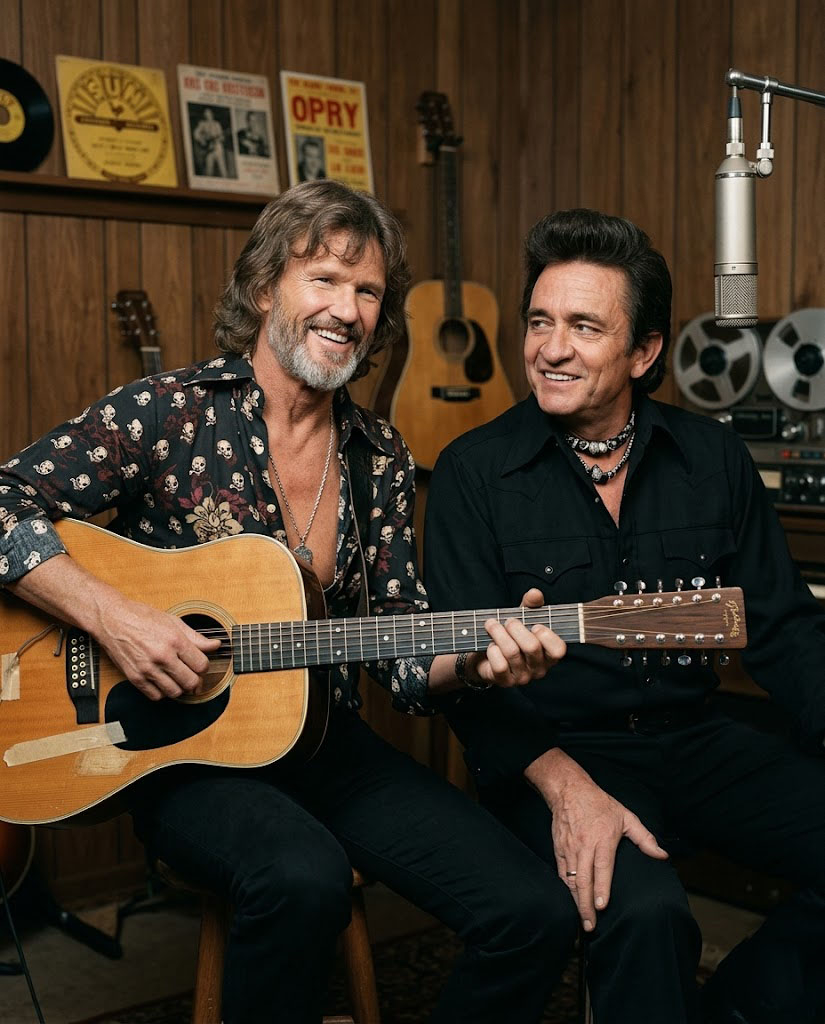
KRIS KRISTOFFERSON WROTE THE GREATEST SONG OF HIS LIFE — THEN HANDED IT TO A VOICE THE WORLD WAS ABOUT TO LOSE FOREVER…
By the late 1960s, Kris Kristofferson already sounded different from nearly everyone else in Nashville.
Not cleaner.
Not smoother.
Just more honest.
He was a Rhodes Scholar who could have chosen almost any life imaginable. An Army Ranger. A helicopter pilot. A man educated enough to move comfortably through elite rooms who instead found himself sweeping floors at Columbia Records just to stay close to music.
That alone sounded like something out of a song.
But Kris Kristofferson was never chasing status.
He was chasing truth.
And eventually, he found it inside a song about highways, freedom, loneliness, and two people who were never built to stay in one place for very long.
“Me and Bobby McGee.”
The song did not sound polished or carefully manufactured for radio. It felt dusty. Human. Like memories drifting through the window of a moving car somewhere between love and goodbye.
Kris wrote it with an ache already living inside it.
Especially the line that would later become immortal:
“Freedom’s just another word for nothin’ left to lose.”
That lyric did not romanticize freedom.
It exposed the loneliness hidden inside it.
Other artists quickly recognized the power of the song. Roger Miller recorded it first. Later came versions from country legends like Willie Nelson and Johnny Cash. Each singer brought something personal into it.
But then Kris gave the song to a friend.
Janis Joplin.
And suddenly everything changed.
By the time Janis stepped into the studio to record “Me and Bobby McGee,” her life already carried the feeling of somebody burning too brightly for too long. Fame had arrived fast. So had isolation. Underneath the wild energy and whiskey-soaked performances was a loneliness people could hear even when she laughed.
That loneliness entered the song with her.
Janis did not sing “Me and Bobby McGee” like a performance. She sang it like somebody trying to hold onto one last fleeting piece of freedom before it disappeared forever.
There was recklessness in her voice.
Joy too.
But underneath both sat exhaustion.
That combination made the recording unforgettable.
She transformed Kris Kristofferson’s words into something larger than songwriting. Suddenly the song no longer felt like a story about two drifters on the road.
It felt like a goodbye nobody realized was happening in real time.
Then came October 1970.
Janis Joplin died from a heroin overdose at only 27 years old.
The world heard her version of “Me and Bobby McGee” only after she was gone.
And that changed the song permanently.
When listeners played the record, they were no longer hearing only Bobby McGee slipping away into memory. They were hearing Janis herself disappearing too. Every note carried the unbearable weight of knowing the voice singing it already belonged to the past.
That grief settled permanently into the recording.
The song exploded to No. 1 on the Billboard Hot 100, becoming the biggest hit of Janis Joplin’s life — and the only No. 1 single she would ever have.
But charts barely explain why the performance endured.
What Janis gave the song cannot really be measured commercially.
She gave it mortality.
Every artist who later touched “Me and Bobby McGee” understood they were approaching something almost untouchable. Willie Nelson brought warmth. Johnny Cash brought gravity. Kris himself carried the wisdom of the man who wrote it.
But Janis carried the ghost.
That is why nobody ever fully escaped her shadow inside the song.
And maybe that is the strange beauty of great music. Sometimes one artist writes the truth, and another arrives at exactly the right broken moment in history to make the world feel it forever.
Kris Kristofferson gave “Me and Bobby McGee” its poetry.
Janis Joplin gave it its soul.
And somewhere between the two of them, the song stopped belonging to music history and became something eternal — a lonely voice still drifting down an endless highway, refusing to disappear into the dark…