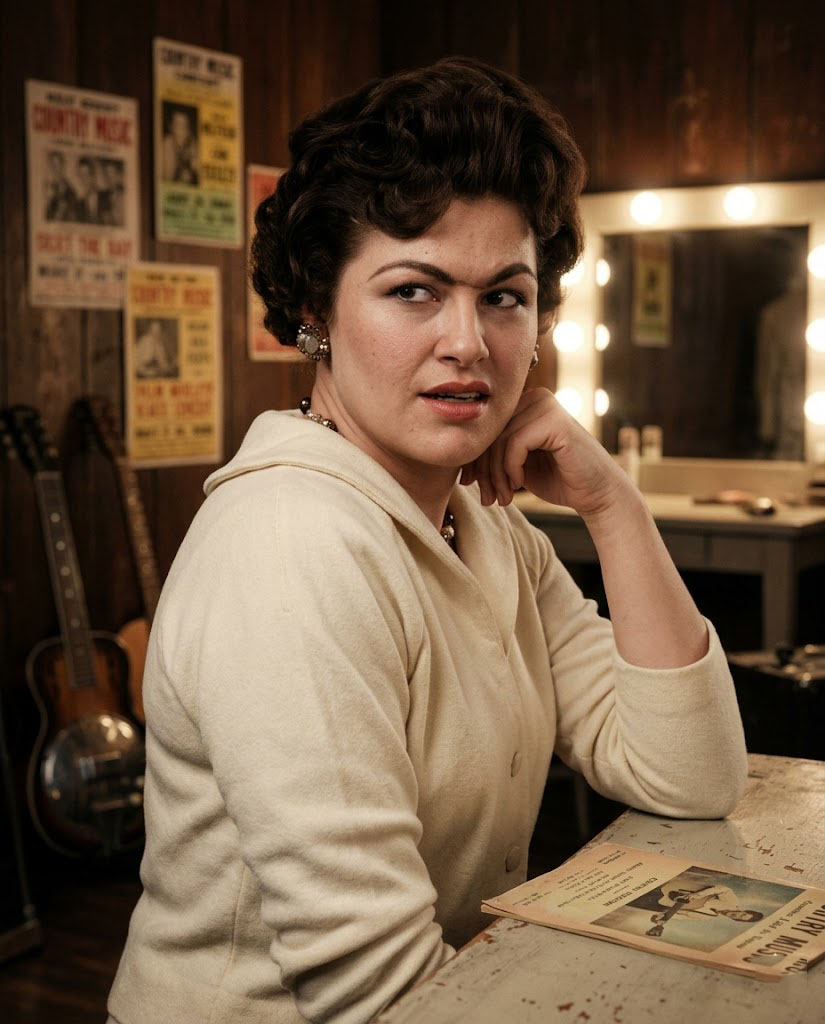
MONTHS BEFORE THE PLANE CRASH, PATSY CLINE RECORDED “YOU BELONG TO ME” — A PROMISE SHE WOULD NEVER LIVE LONG ENOUGH TO KEEP…
In 1962, Patsy Cline stepped into the studio to record “You Belong to Me,” a song already famous long before she touched it.
The lyrics drifted through romantic images of tropical islands, Egyptian pyramids, and oceans separating two people in love.
But Patsy did not sing it like a postcard from somewhere beautiful.
She sang it like distance hurt.
That changed everything.
By then, Patsy Cline had already become one of the most recognizable voices in American music. “Crazy,” “I Fall to Pieces,” and “Walkin’ After Midnight” had turned her into more than a country star. She was becoming something larger — an artist who could carry country heartbreak into pop radio without losing its honesty.
Still, success never removed the loneliness from her voice.
If anything, it sharpened it.
That ache sits quietly inside every line of “You Belong to Me.”
The song itself was gentle and restrained. No dramatic climax. No explosive declaration of love. Just a woman asking someone far away not to forget her while they moved through the world without her beside them.
“Just remember till you’re home again…”
In Patsy Cline’s hands, the lyric stopped sounding comforting.
It sounded fragile.
That was always her gift as a singer. Patsy could take a familiar standard and uncover the sadness hidden underneath it. She did not oversing emotion. She let it settle naturally into the spaces between words.
Sometimes the softest line hurt the most.
“You Belong to Me” appeared on Sentimentally Yours, the album that would tragically become the final studio record released during Patsy’s lifetime. At the time, no one listening could have known how much heavier those songs would eventually feel.
Especially this one.
Because beneath the beauty of the arrangement was an eerie kind of foreshadowing.
The song speaks repeatedly about travel, separation, and safely returning home again. Lovers crossing oceans. Planes moving through distant skies. Promises waiting patiently through the miles.
Then came March 1963.
After performing a benefit concert in Kansas City, Patsy boarded a small private plane headed back toward Nashville. The aircraft encountered severe weather before crashing into the dark woods near Camden, Tennessee.
She was only 30 years old.
Country music lost one of its defining voices in an instant.
And suddenly “You Belong to Me” no longer sounded like a simple love song from a woman missing someone far away.
It sounded haunting.
Listeners returned to the recording carrying knowledge Patsy herself never had when she stood before the microphone. Every lyric about returning home became almost unbearable in hindsight.
Not forced.
Not dramatic.
Just painfully human.
That is what makes the song linger decades later. Patsy Cline’s voice carried an emotional honesty so natural that listeners still feel as though she is confiding something personal directly to them.
No performance tricks.
No distance between singer and listener.
Only longing.
Even the production seems to move carefully around her voice, letting that smoky tenderness remain at the center of everything. Patsy did not need oversized emotion to break someone’s heart. She only needed patience.
A held note.
A small pause.
A whisper that sounded one breath away from silence.
And maybe that is why “You Belong to Me” still feels different now than it did in 1962.
Time changed the song.
What once sounded like devotion now carries the weight of absence too. A promise hanging in the air with nowhere left to land.
But the strange thing about great voices is that they never disappear completely.
Patsy Cline never made it home from that final flight.
Yet somehow, every time the record begins again, it still feels like she found a way to return to us anyway…